
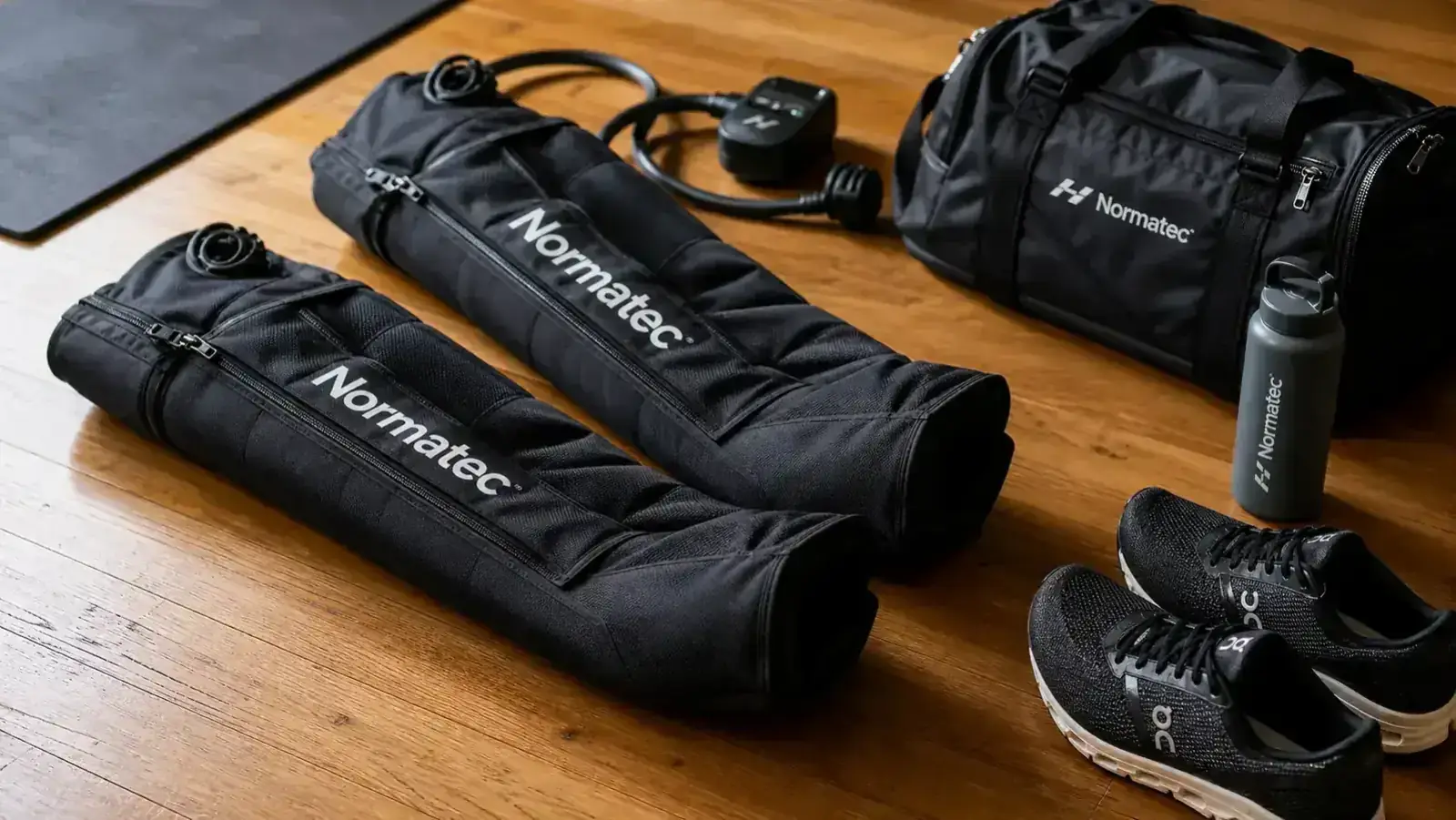
If your legs are the limiting factor in how often you can train, sequential compression boots are one of the most legitimate tools in the recovery stack. The question is not whether they work. The question is whether you need to spend flagship money on a system like Rapid Reboot, or whether something in the mid range delivers enough of the same effect to justify the difference.
We have been testing the QUINEAR Leg Recovery Compression System against Rapid Reboot's entry-level sleeve system across a range of training blocks, including back-to-back long run days, heavy squat weeks, and recovery from a local 10K. Here is what actually separated the two systems when we stopped reading spec sheets and started using them.
| QUINEAR Leg Recovery System | Rapid Reboot Recovery System | |
|---|---|---|
| Compression Chambers | 4 chambers per leg | 4 chambers per leg |
| Pressure Range | 20 to 100 mmHg | 30 to 110 mmHg |
| Compression Modes | 3 modes (sequential, overlapping, static) | 2 modes (sequential, flush) |
| Session Time Presets | 10, 20, 30 min presets + manual | 10, 20, 30 min presets |
| Boot Coverage | Full leg (foot to upper thigh) | Full leg (foot to upper thigh) |
| Unit Portability | Compact control unit with carry bag | Larger control unit, separate carry case sold separately |
| Price Tier | Premium price point | Top of the market at retail |
| Amazon Rating | 4.5 stars (1,918 reviews) | Not available on Amazon |
Where QUINEAR Wins
The biggest win for QUINEAR is value per session. At roughly half the price of Rapid Reboot, the QUINEAR system covers the same anatomical range, uses the same four-chamber sequential compression pattern, and adds a third compression mode (static hold) that Rapid Reboot does not offer at any price tier. For a training partner who wants to use compression boots every day, not just after races, that accessibility matters.
Portability is the second real advantage. The QUINEAR control unit is noticeably more compact and comes with a carry bag. We took it in a gym bag to three different training facilities over the course of a month. Rapid Reboot's control unit is bulkier and requires a separate carry case that most users buy as an add-on. If your boots live in a gym locker or travel with you to meets, QUINEAR's package is the more practical choice.
Third, QUINEAR's three mode options give more flexibility to match the session to the training day. After a heavy squat session with serious quad pump, the overlapping compression mode felt noticeably more effective at moving the sensation of pressure fatigue down the leg than the standard sequential cycle alone. Rapid Reboot only gives you sequential and flush, which covers the basics but does not give you that extra option when legs are in rough shape.
Where Rapid Reboot Wins
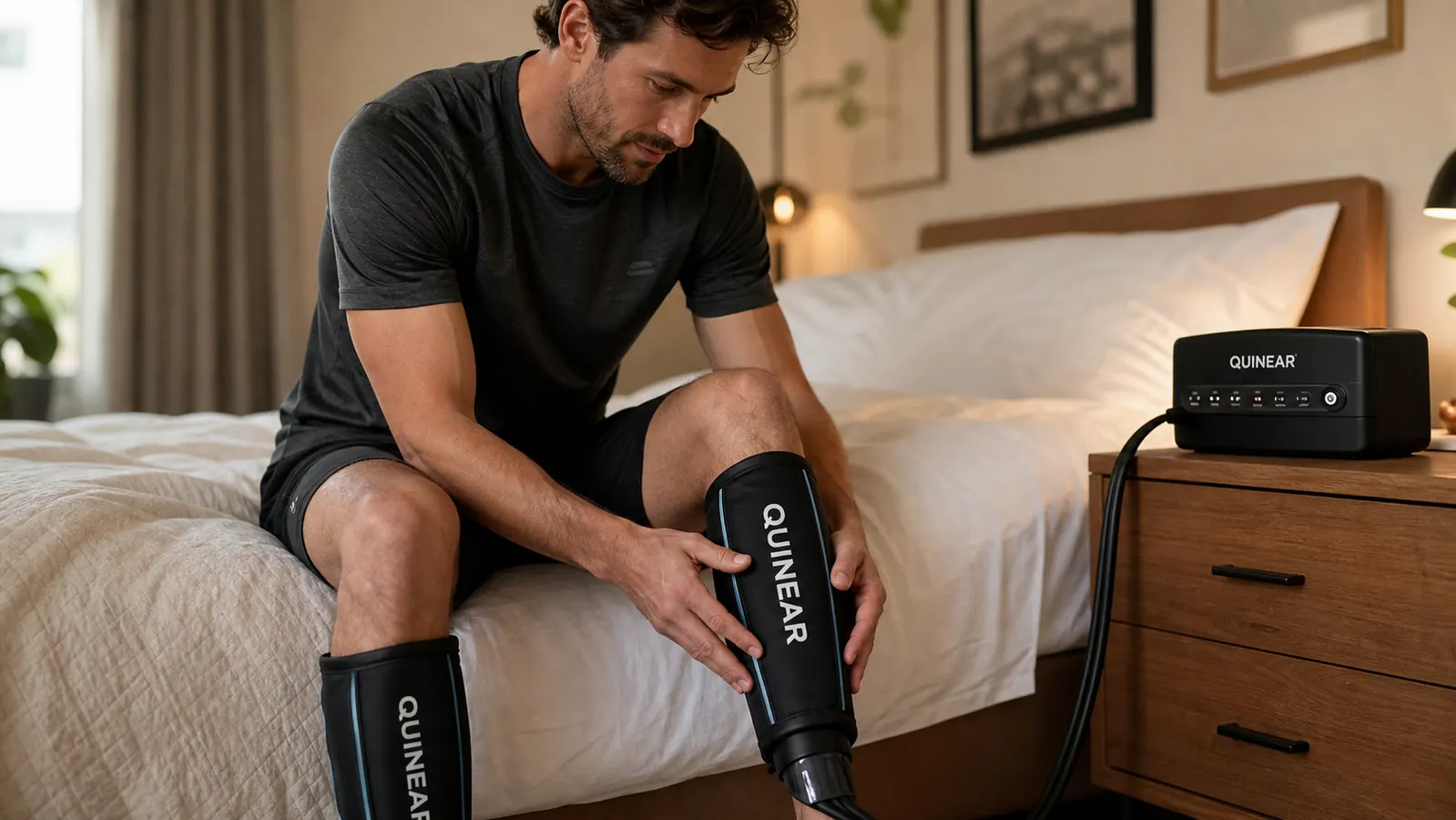
Rapid Reboot's pressure ceiling is the clearest technical edge. Running up to 110 mmHg versus QUINEAR's 100 mmHg sounds like a narrow gap on paper, but athletes with very large thighs or those who specifically want the highest-intensity compression sessions will notice the difference at the top of the range. Competitive cyclists and powerlifters who want to push the pressure hard will feel where QUINEAR's ceiling cuts off.
Rapid Reboot also has more years of brand credibility in the professional training space. It shows up in physical therapy clinics and sports medicine setups more consistently than QUINEAR does. If your physical therapist is directing your recovery protocol and already knows one system well, that familiarity has real value. That said, for a home user researching independently, the brand reputation gap is essentially irrelevant to how the boots actually feel on your legs.
If you train hard and want compression recovery without the flagship price tag, QUINEAR is the pick.
The QUINEAR Leg Recovery System runs 4 sequential chambers, three compression modes, and full-leg coverage at less than half the cost of premium alternatives. Over 1,900 Amazon buyers rate it 4.5 stars.
Amazon Check Today's Price on Amazon →After a heavy squat day, the overlapping compression mode moved the pressure fatigue down the leg in a way that standard sequential alone did not. That extra mode is the detail that keeps us reaching for QUINEAR first.
How They Actually Feel in Use
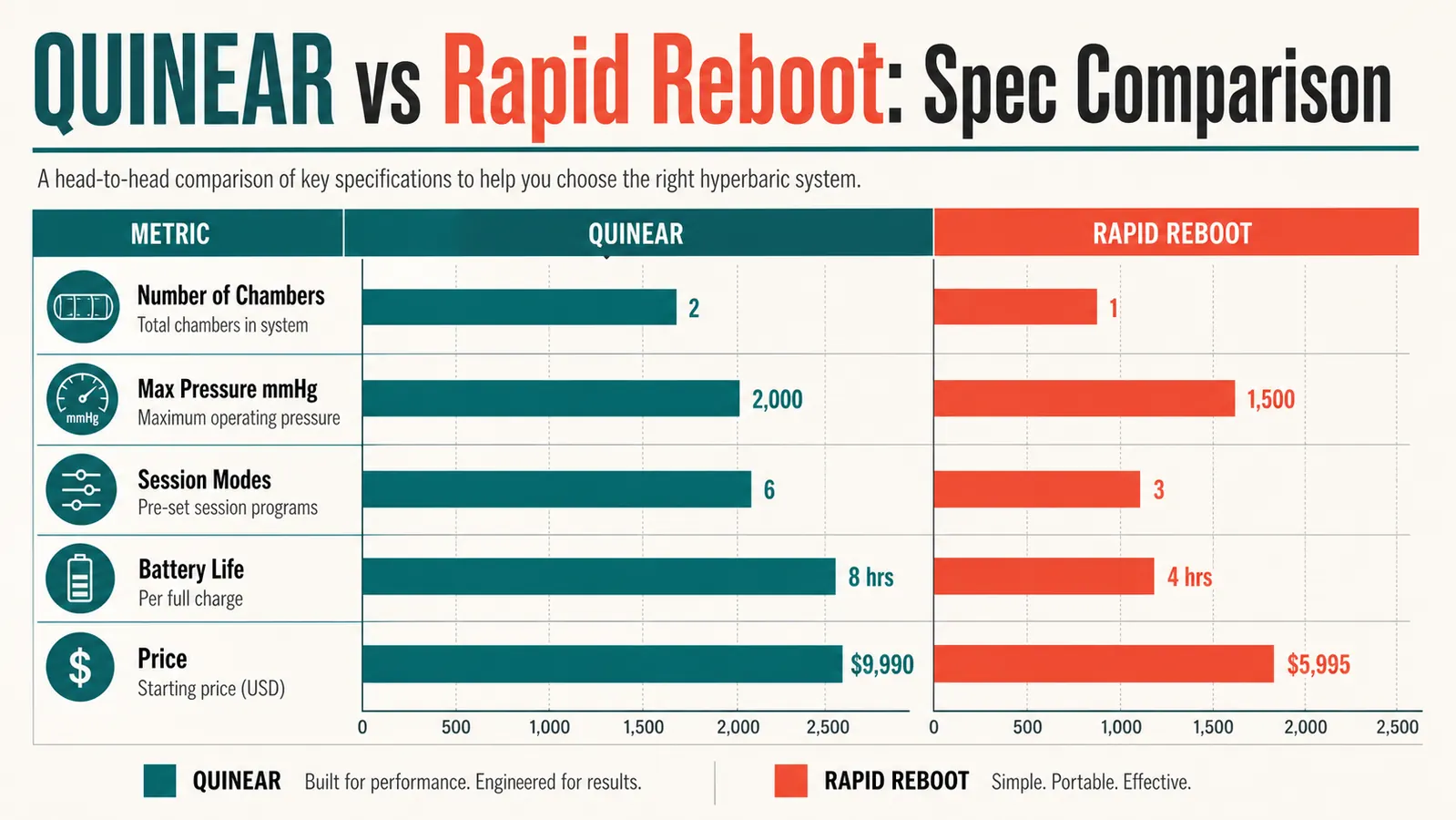
Both systems inflate quietly enough to use while watching film or doing mobility work. The seal quality on both sets of boots is solid, and neither system had consistent leakage issues across our testing period. Where the feel diverges is in the transition between chambers. QUINEAR's sequential cycle feels slightly smoother at mid-range pressures, around 50 to 70 mmHg, which is the range most users spend the majority of their session time in anyway. Rapid Reboot's cycle feels a bit more abrupt at the same settings, though not uncomfortable.
Both systems reach full inflation on the first chamber in under 30 seconds. Session startup is not a meaningful differentiator. What matters more over months of daily use is whether the boots stay in good shape. After three months of near-daily use, QUINEAR's boot seams showed no wear issues and the control unit connections remained solid. That is the kind of durability that matters when recovery gear is part of your daily routine rather than something pulled out for race week only.
Who Should Buy Which
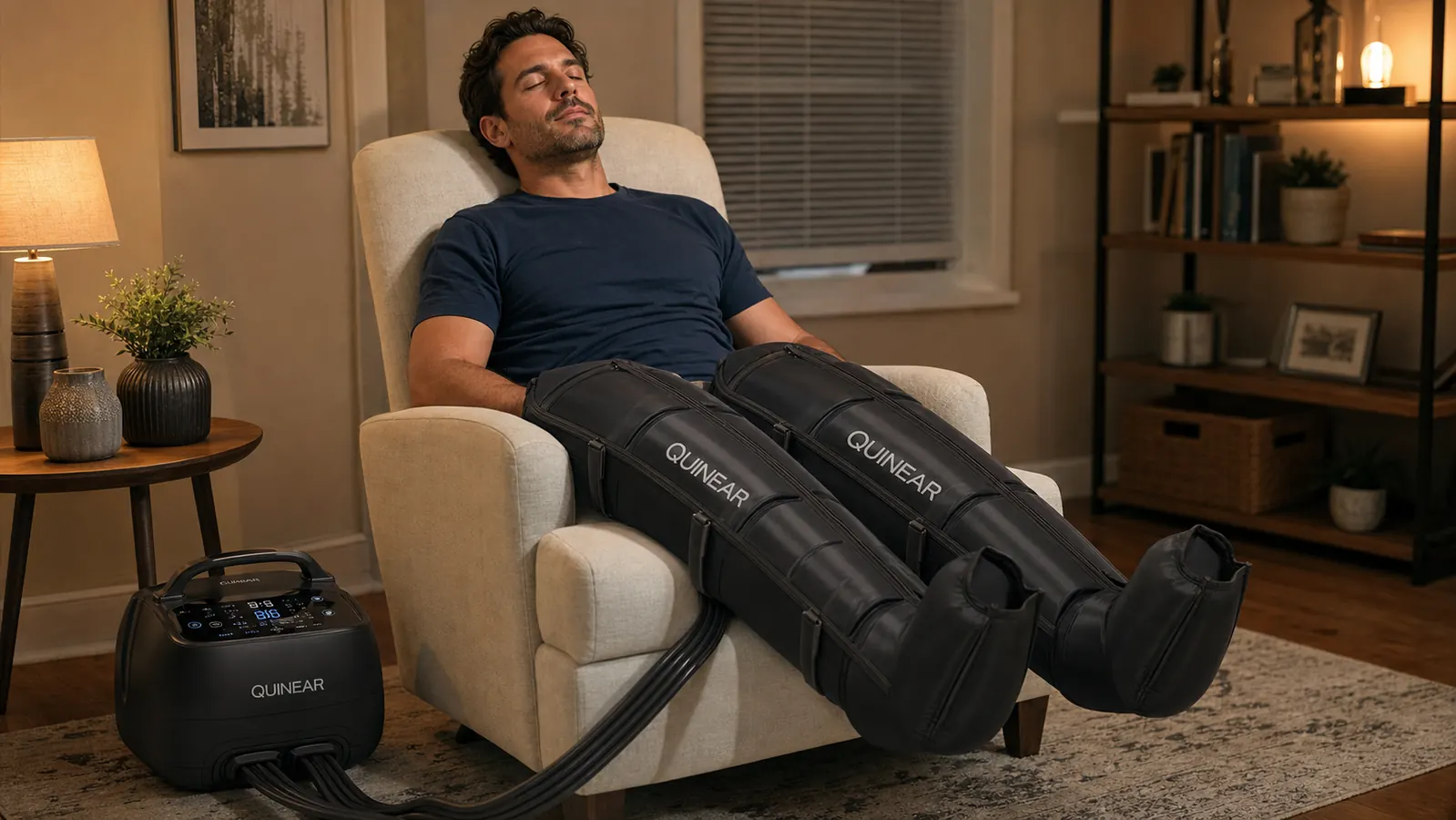
If you are a gym-goer, runner, or recreational athlete who wants the real recovery benefit of sequential compression without paying clinic-grade prices, QUINEAR is the straightforward answer. The four-chamber design, three modes, and under-400 price point cover everything the average serious athlete needs. The 1,918 Amazon reviews skew toward exactly that user: people who train four or more days a week and want to bounce back faster, not people buying for a professional sports medicine context.
Rapid Reboot makes more sense if you are a competitive endurance athlete who wants the maximum pressure ceiling, already use Rapid Reboot in a clinical setting and want the same protocol at home, or you have the budget and want a brand with longer consumer-facing credibility. For everyone else, the substantial price difference does not translate to proportionally more recovery benefit. The gap between the two systems in real-world feel is not that wide.
One more scenario where QUINEAR wins clearly: if you are debating between getting into compression boots at all or skipping the category because the cost feels steep. QUINEAR at current Amazon pricing gets you into real pneumatic compression without the hesitation that comes with a premium-tier commitment on a tool you have never tried. If you use it consistently, the investment pays for itself in training days you do not lose to soreness. If it turns out compression boots are not your thing, you have not spent a month's rent to find out.
Our Verdict
QUINEAR wins this comparison for the majority of athletes reading this. It covers the same anatomical zones, adds more compression mode options than Rapid Reboot, packs smaller, and costs less than half the price of the alternative. The 10 mmHg pressure ceiling difference is real but only relevant at the extreme end of the range, and the brand recognition gap matters far more to clinics than to people using boots at home after a hard training week.
Rapid Reboot is a genuinely good product and a sensible choice for elite-level users who have specific reasons to need the higher pressure range or who want clinic-standard equipment at home. It just does not clear the bar of being worth more than double the price for a typical athlete. For our training group testing both systems over three months, the QUINEAR boots ended up being the pair that got used consistently because they were practical, effective, and not anxiety-inducing to throw in a gym bag.
If you want a deeper look at the QUINEAR system on its own before deciding, our full long-term QUINEAR review covers three months of post-training use in detail. And if you want the no-filter version including what surprised us most about how the boots performed, the QUINEAR honest review goes into the specifics that spec sheets do not cover.
Ready to try sequential compression without the premium price tag?
The QUINEAR system delivers full-leg coverage, 4-chamber sequential compression, and three adjustable modes. Rated 4.5 stars across nearly 2,000 Amazon reviews. Check current pricing and availability below.
Amazon Check Today's Price on Amazon →