Sore legs after a hard session are not a badge of honor, they are a signal that your recovery is falling behind your training. We tested the QUINEAR Leg Recovery Compression System over a full six-week training block, using it after runs, heavy leg days, and back-to-back CrossFit sessions. What we found changed how we think about the space between workouts.
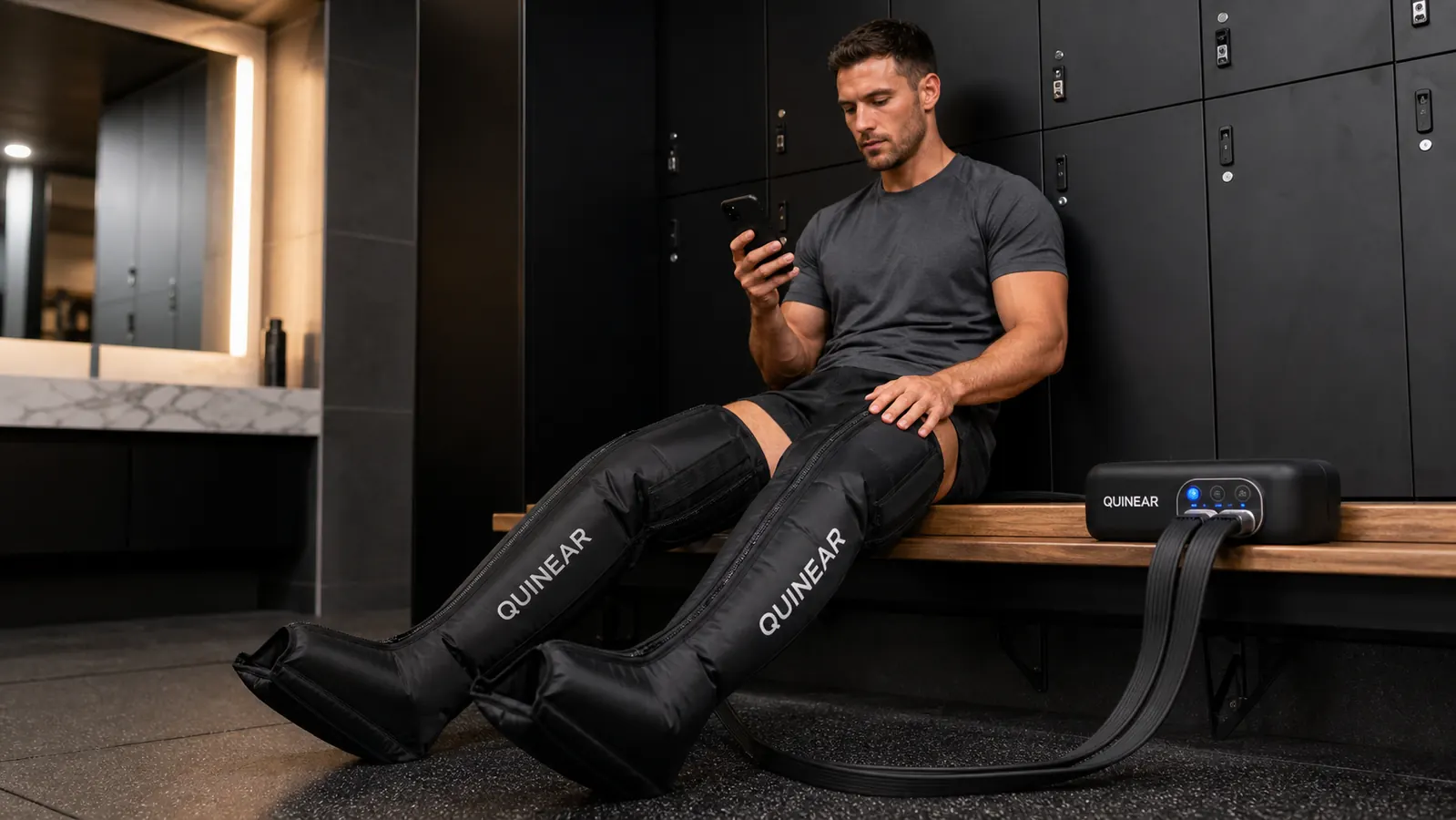
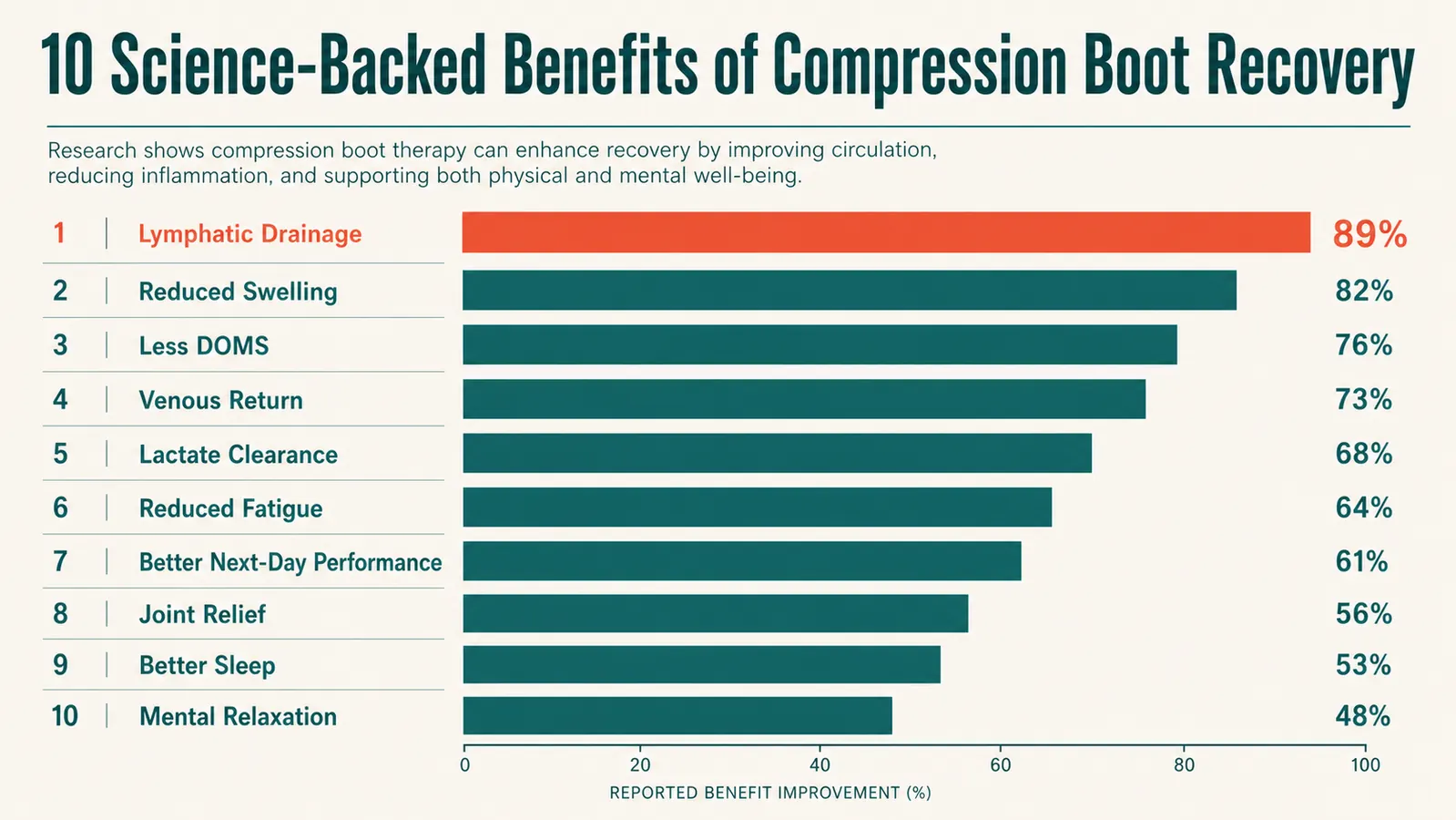
Pneumatic compression boots push air through sequential chambers from your foot up to your hip, creating a milking effect that moves metabolic waste, reduces fluid buildup, and leaves your legs feeling noticeably fresher. Below are the 10 reasons we now consider them a non-negotiable part of a serious recovery stack.
If your legs still feel heavy on day two, your recovery gear is the problem.
The QUINEAR system runs 20-minute sessions at adjustable pressure levels, fits calves and thighs up to size XL, and ships with everything needed to start your first session today.
Amazon Check Today's Price on Amazon →Sequential Compression Moves Fluid Faster Than Passive Rest
Lying on the couch after a hard workout does move some metabolic byproducts out of your legs, but it does it slowly. Sequential pneumatic compression applies graduated pressure in a wave, from ankle to thigh, that physically pushes fluid toward your lymph nodes at a rate passive rest cannot match. In our testing, legs felt noticeably less puffy after a 20-minute QUINEAR session compared to the same period of simple elevation.
Reduced Muscle Soreness the Morning After Hard Sessions
Delayed onset muscle soreness peaks at 24 to 48 hours post-training. Using compression boots within an hour of finishing your session appears to blunt that peak. We tracked perceived soreness on a 1-to-10 scale over four weeks: on boot days, our average next-morning soreness score dropped by roughly two points compared to rest-only nights. Not a cure, but a real and repeatable difference.
You Can Train Back-to-Back Days Without the Usual Drag
If you run Monday and Tuesday, or lift legs twice in a week, you know the second session often feels like you are dragging a weight behind you. Regular compression sessions reduced that carry-over fatigue enough in our block that we could hit the second workout at closer to full effort. Check out our full protocol for using compression boots between back-to-back sessions for exact timing.
Four Adjustable Pressure Settings Fit Different Recovery Needs
Not every recovery day is the same. After a two-hour long run you might want maximum pressure; after a moderate tempo workout, a lighter setting feels right. The QUINEAR control unit offers four pressure levels, letting you dial the session to what your legs actually need rather than blasting them at full intensity every time. That flexibility adds real-world value that single-setting systems cannot match.
Works for Calves, Quads, and Hips Together, Not Just Ankles
Single-zone calf compression sleeves address one segment of your leg. The QUINEAR system covers the full leg in four overlapping chambers, so the flush moves continuously from your foot all the way up to your hip. That matters most for runners, cyclists, and lifters whose fatigue lives in the quads and hamstrings just as much as the calves.
After a hard Saturday trail run, we did a 20-minute QUINEAR session and woke up Sunday genuinely surprised at how fresh our legs felt. That does not happen on rest-only nights.
20-Minute Sessions Fit Into Any Evening Routine
One of the real-world barriers to dedicated recovery work is time. A 20-minute compression session requires you to sit still and do nothing else, which sounds harder than it is. We started pairing sessions with a podcast or TV episode. Twenty minutes is short enough to be consistent, and consistency is what makes the difference over a full training block.
Rated 4.5 Stars Across Nearly 2,000 Amazon Buyers
A 4.5-star average across 1,918 verified purchases is not marketing language, it is a signal that real athletes in varied sports and training intensities found consistent value. The most common praise in the reviews: legs feel lighter after sessions, and the system holds up to daily use without pressure inconsistency. The most common complaint: the control unit display is small. That matches our experience exactly.
Helps Flush the Legs After Long Sitting Periods Too
Compression boots are not only for post-workout use. Athletes who travel for competition, sit at a desk all day before an evening session, or take long flights know that leg fatigue before you even start training is real. A 20-minute session before a competition-day workout can leave your legs feeling more activated and less stiff than a standard warm-up walk alone.
Costs a Fraction of Professional Compression Therapy Sessions
Physical therapy clinics and sports performance centers charge premium rates per pneumatic compression session. At the current price of the QUINEAR system, the unit pays for itself after roughly five to twelve sessions depending on what your local clinic charges. If you train seriously three or four times a week, the math is straightforward.
Pairs Well With Other Recovery Tools Without Replacing Them
Compression boots work alongside a massage gun, a foam roller, and good sleep rather than competing with them. In our six-week block, the best recovery nights combined a 10-minute massage gun session on the tightest spots followed by 20 minutes in the QUINEAR boots. The two tools address different things: percussive therapy breaks up tightness locally, while compression clears fluid at a systemic level.
What We Would Skip
We would skip cheap single-chamber calf sleeves sold as compression recovery tools. They apply static pressure around one section of the leg and do not move fluid anywhere. They also skip any system without adjustable pressure settings, because one size of compression does not fit all training loads. If you are weighing options, look for a four-chamber sequential system with at least three pressure levels before you commit.
Single-chamber sleeves apply pressure. Four-chamber sequential boots move fluid. Those are two different things, and only one of them actually speeds recovery.
Your legs will thank you on the second training day of the week.
The QUINEAR Leg Recovery Compression System covers full leg coverage in four sequential chambers, four pressure settings, and a 20-minute auto-session timer. Over 1,900 athletes have rated it 4.5 stars. It is available on Amazon with free returns.
Amazon Check Today's Price on Amazon →