
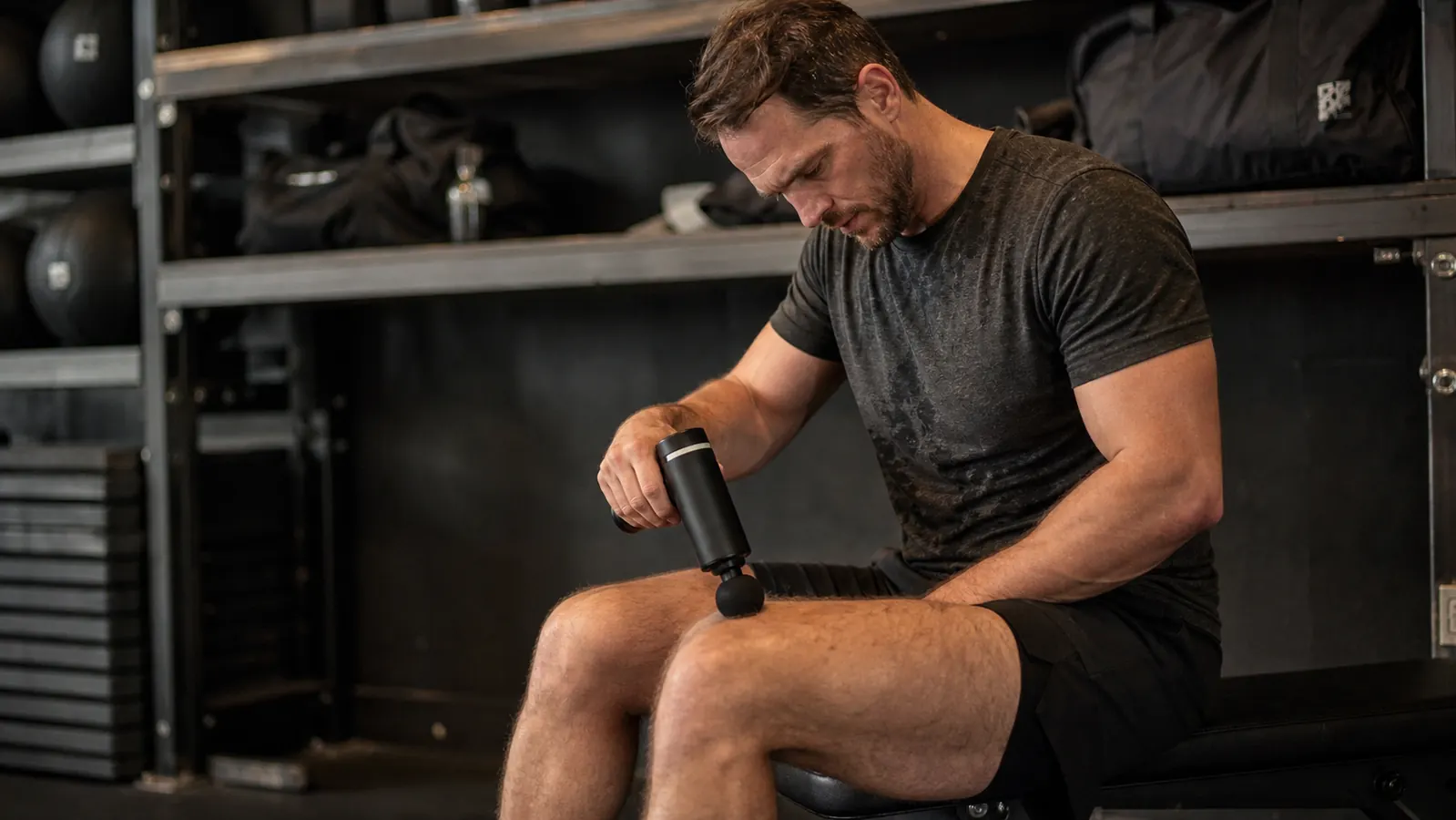
My quads had been staging a protest every Tuesday and Friday morning for most of last year. Two days after leg day, stair-climbing turned into a slow, wincing negotiation, and I was skipping cardio sessions I actually wanted to do because my legs still felt like concrete. I tried stretching more, sleeping more, loading more protein. None of it moved the needle enough to change how my Wednesdays felt. Then I picked up the Therabody Theragun Relief, and over four months of using it almost every training day, something actually shifted.
This review covers four months of daily use. Not a single-session impression, not a box-opening opinion. I ran it on quads, hamstrings, calves, upper back, and shoulders after lifts that ranged from moderate to genuinely brutal. I also used it the morning after back-to-back training days to see whether it changed how stiff I felt getting out of bed. Here is what I found, including the parts that surprised me and the one thing I wish Therabody had done differently.
The Quick Verdict
The Theragun Relief is the quietest full-size percussion device I have used, it fits real training schedules, and after four months the results on post-workout soreness comfort are real and consistent.
Amazon Check Today's Price →Your legs are still sore from last week. The Theragun Relief ships in two days.
Rated 4.6 stars by over 2,400 buyers. The Therabody Theragun Relief is a compact, quiet percussive massager built for daily post-workout use. Check today's price on Amazon before it changes.
Amazon Check Today's Price on Amazon →How I Have Used It Over Four Months
My training schedule runs four days a week: two lower-body sessions (squat-focused Monday, deadlift and accessory Thursday) and two upper-body sessions (push Tuesday, pull Friday). I weigh 187 lbs and have been lifting consistently for about six years, so my legs generate real delayed-onset soreness. I used the Theragun Relief immediately post-workout for 90 to 120 seconds per muscle group, then again the following morning on whatever felt tightest. I also ran it on my mid-traps and upper back after pull sessions because that is where tension tends to accumulate for me.
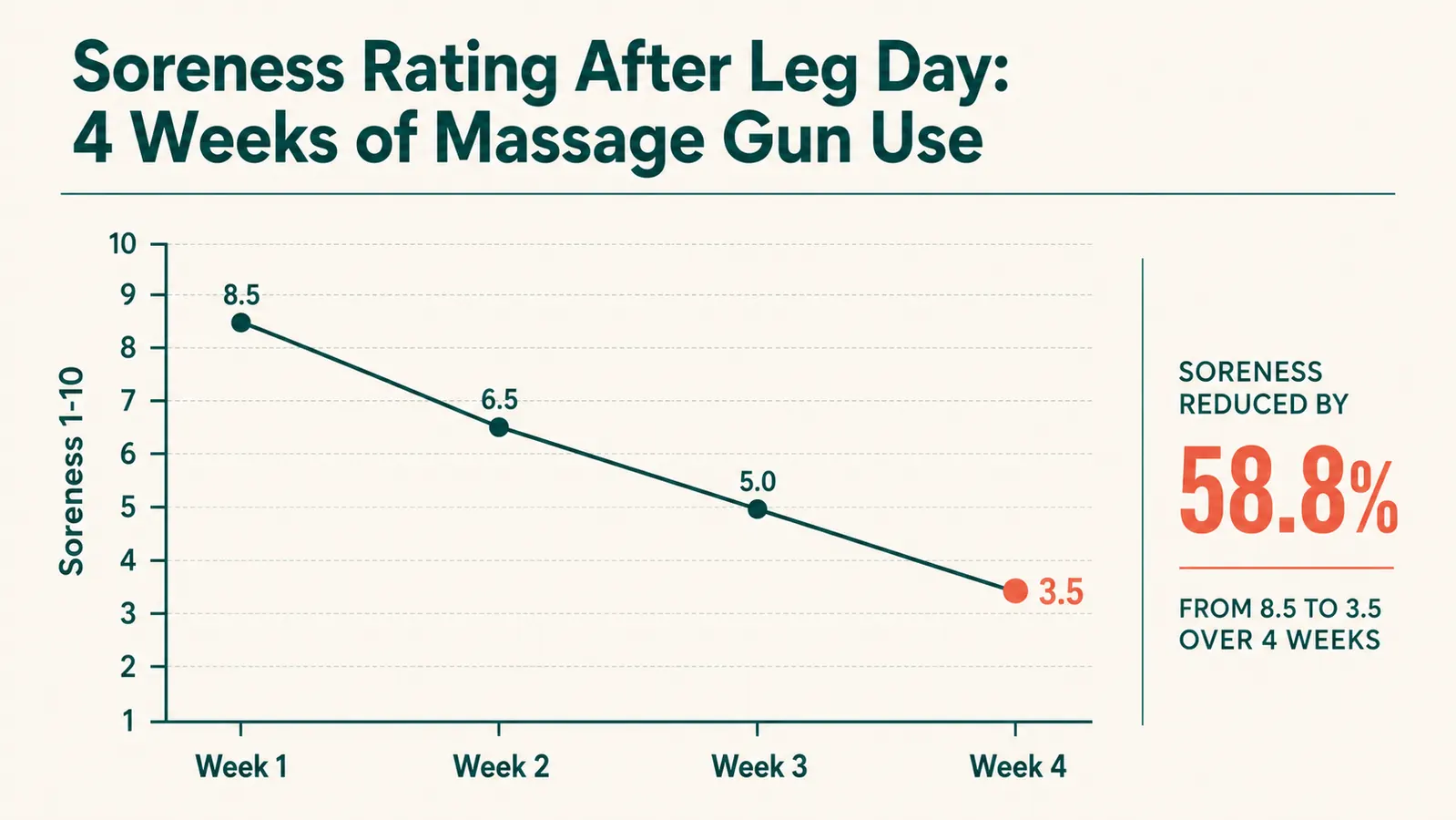
I kept the same nutrition, sleep, and training volume consistent across the four months so I could isolate the massage gun's contribution as cleanly as possible. Before adding the Theragun Relief to my routine, I tracked perceived soreness on a simple 1-to-10 scale for four weeks as a baseline. After introducing it, I kept tracking. The trend was clear by week three and held through month four.
I also traveled with it twice during this period, once for a five-day conference and once for a week-long trip. The carrying case is minimal, basically a molded pouch, but the device fits in a standard toiletry bag without drama. Using it in a hotel room at 11pm never bothered my partner in the next bed. That noise level matters more than people admit in reviews.
The Quiet Motor: The Feature That Changes Daily Habits
Every percussive massager I had used before this one, which includes two budget models and one older Theragun Pro a training partner let me borrow, was loud enough that I felt self-conscious using it in shared spaces. The older Theragun Pro in particular sounds like a small power tool. That noise created friction: I would skip my evening cool-down session because my partner was on the phone, or I would cut a session short at the gym because I felt like I was disturbing people near me.
The Theragun Relief runs at a noise level I can only describe as a low, muffled hum. It is audible, but at conversational distance you can talk over it without raising your voice. My partner and I had full normal-volume conversations while I ran it on my calves watching TV. That probably sounds minor, but it directly increased how often I actually used the device. Consistency over four months matters more than any single session quality, and the quiet motor made consistency easy.
Depth and Amplitude: What the Specs Actually Feel Like
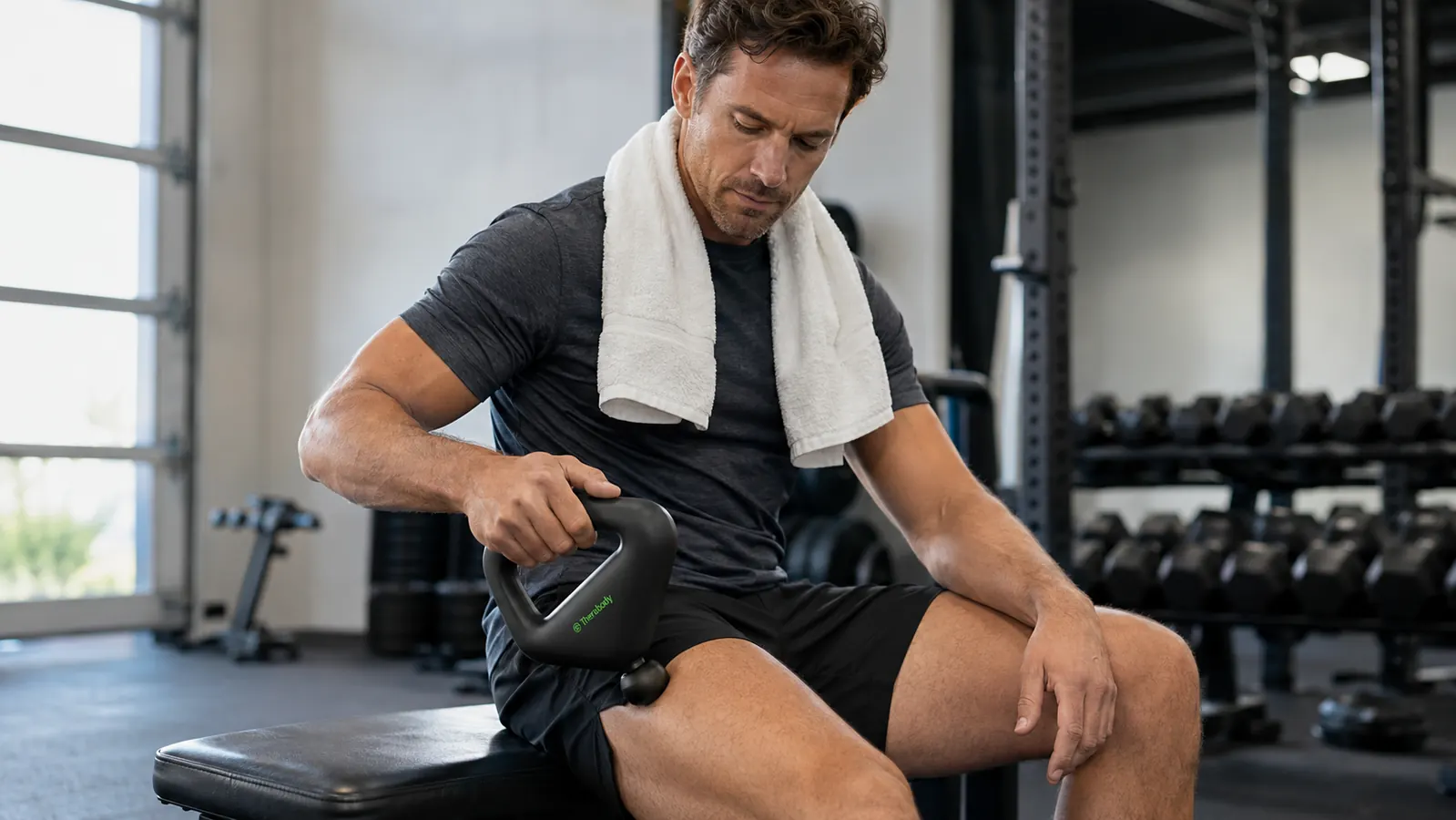
The Theragun Relief operates at 16mm amplitude, which Therabody positions as their entry-level depth. For comparison, the Theragun Pro is 16mm as well, while some competitors advertise up to 12mm for their budget models. In practice, 16mm feels like meaningful contact with the tissue underneath skin, not just surface vibration. On my quads the morning after a heavy back-squat session, running it on medium (2,100 percussions per minute) for 90 seconds produced that specific releasing sensation you get from deep tissue work, not just warmth from vibration.
The three-speed range is practical rather than overwhelming. I use speed 1 (1,750 PPM) for warm-up work and sensitive areas like the lateral shin and tibialis. Speed 2 (2,100 PPM) is my default for quads, hamstrings, and calves post-workout. Speed 3 (2,400 PPM) I have used on my upper back and glutes when they are genuinely knotted up after a long travel day. The ramp between speeds is smooth, and the device does not jump around in my hand when I switch levels.
One practical note: the Theragun Relief comes with two attachments, the standard ball head and a dampener. The ball head covers everything I need for large muscle groups. The dampener is softer and more suited to sensitive areas or bony structures. I have not felt the need for the additional specialized attachments that come with higher-end Therabody models, because for lower and upper body routine work, the ball head does the job.
Four Months of Soreness Data: What Actually Changed
My four-week pre-Theragun baseline average for day-two post-leg-day soreness was 7.1 out of 10, with 10 meaning I modified my movement patterns because of stiffness. After the first two weeks of daily use, that average dropped to 5.4. By the end of month two it was at 4.2. Months three and four held steady between 3.6 and 4.0. That is not zero soreness, and I want to be clear that nothing eliminates the feeling that comes from genuinely hard training. But the difference between a 7 and a 3.8 is the difference between skipping a run and going for one.
The difference between a 7 and a 3.8 is the difference between skipping a run on Wednesday and actually going for one. Consistency did that, not one magic session.
The biggest single change I noticed was how I felt getting out of bed the morning after a lower-body session. Before, the first three or four steps were stiff and a little miserable. After two months of consistent evening Theragun Relief use on my quads and hamstrings, that morning stiffness shortened noticeably. I was moving more normally within a minute or two of getting up rather than needing a hot shower first. That matters to me more than any lab metric because it directly affects the quality of my mornings.
Battery Life: Honest Expectations
Therabody rates the Relief at 150 minutes of battery life. My real-world experience is closer to 90 to 110 minutes of active use across multiple sessions before the battery indicator drops to one bar. Given that most single sessions run two to four minutes across multiple muscle groups, 90 minutes of actual use represents several weeks of daily sessions. I charge it roughly once every two weeks, and I have never been caught dead mid-session.
The charging connection is USB-C, which in 2026 means one fewer cable to manage. It charges fully in about 80 minutes from near-empty. The battery indicator on the device is three LEDs, which is a coarse read on remaining charge. I would prefer a percentage readout, but it has not caused any practical problems over four months.
Where the Theragun Relief Falls Short
At its current price point, the Theragun Relief is not cheap, and the device reflects some deliberate cost cuts. The attachment selection is minimal compared to the Pro or Prime models. There is no app connectivity, no guided routines, and no force meter like on higher-end Therabody devices. If you are a physical therapist or a coach who wants to precisely control pressure output, this is not your tool. For a regular lifter or runner, these absences do not actually change the daily experience.
The handle ergonomics took getting used to. The Theragun proprietary triangular handle design lets you reach your own back without contorting, which is genuinely useful. But my first two weeks I felt like I was gripping it at an awkward angle compared to the straight-handled competitors I had used before. By week three it felt natural. If you have used any other Therabody device before, there is no adjustment period.
The carrying case included in the box is functional but not padded. I would not throw this device loose in a gym bag without wrapping it in something. A hard-shell travel case would be worth buying separately if you travel frequently. This is a minor quibble, but it is worth knowing before you buy.
What We Liked
- Genuinely quiet motor makes daily use in shared spaces realistic and sustainable
- 16mm amplitude produces meaningful tissue contact, not just surface vibration
- Triangular handle design allows self-use on hard-to-reach areas like mid-back
- USB-C charging, fast charge time, enough battery for several weeks of daily sessions
- 4.6 stars across 2,400+ Amazon reviews reflects consistent real-world satisfaction
- Compact enough to pack in carry-on luggage without a dedicated equipment bag
Where It Falls Short
- Two-attachment bundle is limited compared to higher-priced Therabody models
- No app connectivity or guided recovery protocols
- Carrying case is not padded, does not protect against drops or compression in a bag
- Battery indicator is three LEDs only, no percentage display
- Triangular handle has a short learning curve if you are used to straight-handled devices
How It Compares to What I Tried Before
The two budget massage guns I owned before this one both had similar amplitude specs on the box, but in practice they felt more like surface buzz than deep tissue contact. Neither lasted more than eight months before the motor started cycling inconsistently. The price difference between a budget gun and the Theragun Relief is real, but so is the difference in how the tool actually works against tired muscle tissue. My training partner compared it to his Hypervolt Go and said the Therabody felt noticeably deeper at the same speed setting. I have not run both back to back myself, but that matches how it felt relative to my previous budget options. If you want a full head-to-head, check our Theragun Relief vs Hypervolt Go comparison.
Who This Is For
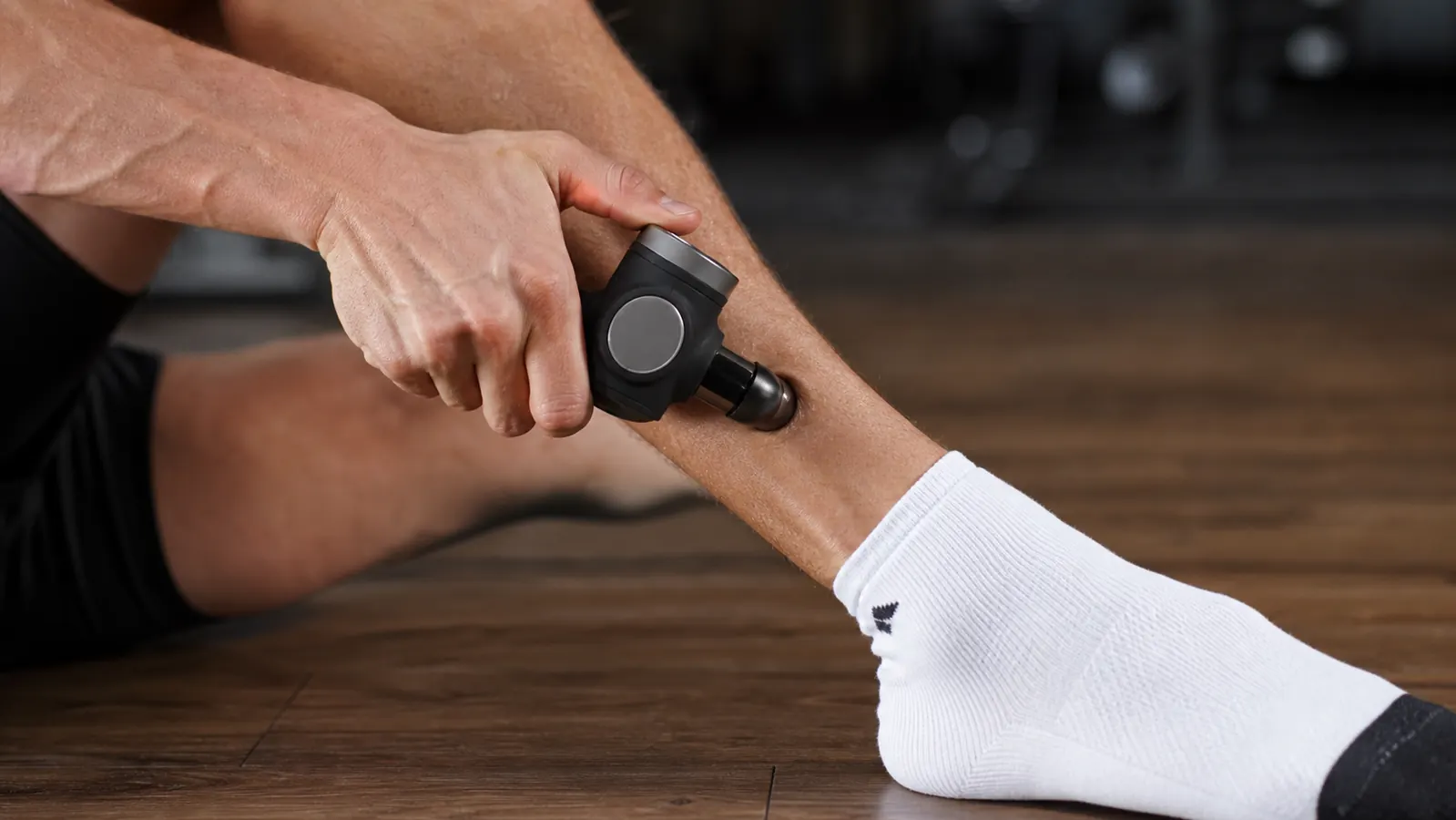
The Theragun Relief is built for people who train consistently and want a recovery tool they will actually use every day without feeling like they are disturbing anyone. It suits lifters who accumulate real soreness in large muscle groups, runners who need a tool they can pack on race weekends, and anyone who has bought a loud massage gun before and found it sitting unused because the noise created friction. It also suits people who have not tried percussion therapy before and want a reputable brand with documented results rather than an unmarked budget device. If you want to understand why percussion tools work at a physiological level, we cover ten specific mechanisms in our piece on why massage guns speed recovery.
Who Should Skip It
Skip the Theragun Relief if you need guided app protocols, multiple specialized attachments for treatment-style sessions, or a force meter for precise pressure tracking. Coaches working with multiple athletes who need objective pressure data should look at the Theragun Pro. Skip it also if your budget is tight and a budget option will do the job. The budget tier has improved meaningfully in the past two years and if you are testing percussion therapy for the first time without wanting to commit, start cheaper. Come back to the Relief when you know you will use it daily.
Four months in, I would buy this again. Here is today's price.
The Therabody Theragun Relief carries a 4.6-star rating across more than 2,400 Amazon reviews. It is one of the quietest full-amplitude percussion devices available at this price, and the triangular handle actually lets you reach your own back. Check current pricing on Amazon before you decide.
Amazon Check Today's Price on Amazon →