
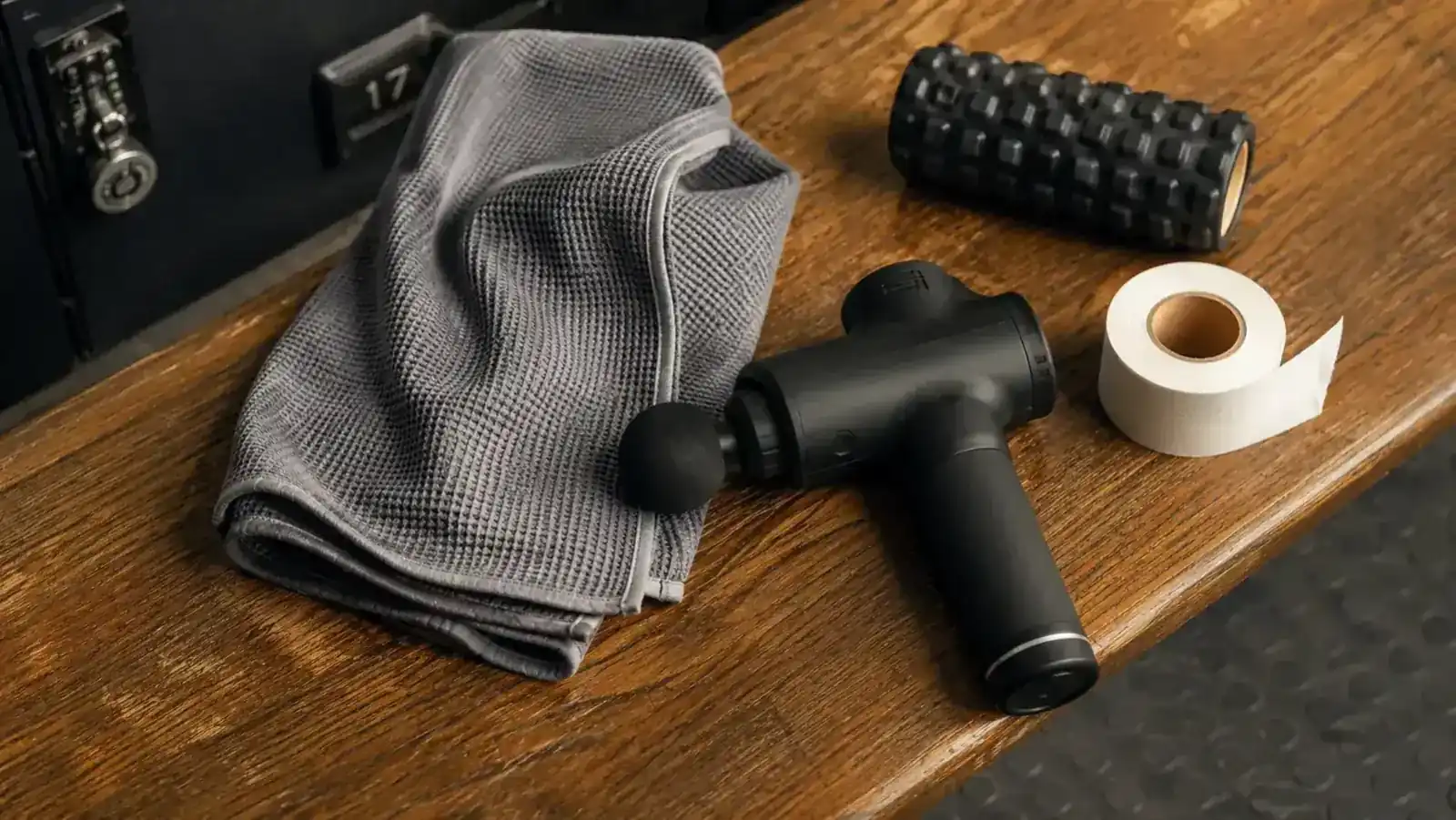
We have tested a lot of massage guns over the past two years. Most of them fall into one of two buckets: cheap tools that feel like a vibrating toothbrush, or expensive devices that are embarrassingly loud and awkward to hold while trying to hit your own traps. The Theragun Relief, Therabody's entry-level percussive device, pitches itself as something different: a quiet, ergonomic gun that delivers real therapeutic percussion without requiring a Therabody Pro budget. That pitch is mostly true. But there are things the Amazon listing and the brand's own marketing glosses right over, and after putting the Relief through our testing rotation with three different athletes, we want to lay those out clearly before you decide.
Our testers: Marcus, 34, a competitive CrossFit athlete with notoriously tight hip flexors and a low tolerance for gadgets that underdeliver. Priya, 29, a trail runner who trains six days a week and had never used a percussion device before we handed her this one. And James, 42, a recreational lifter who uses recovery tools primarily for upper back and neck tension after long days at a desk. Three very different bodies, three very different use cases. The Theragun Relief (ASIN B0DG6SX3VS, rated 4.6 stars across more than 2,400 Amazon reviews) performed differently for each of them, and the gaps are worth knowing about.
The Quick Verdict
The Theragun Relief is genuinely quiet and ergonomically clever, but the three-speed limit and single included attachment will frustrate anyone with specific recovery needs. Excellent for most people, limiting for specialists.
Amazon Check Today's Price →Tired of loud, awkward massage guns? The Theragun Relief fixes both problems.
Check the current price on Amazon and see which size and color options are in stock. Buy Box verified, ships Prime.
Amazon Check Today's Price on Amazon →How We Tested It
Each tester used the Theragun Relief as their only post-workout recovery tool for three consecutive weeks. We standardized the sessions: two minutes per muscle group, ball attachment on, working through whatever was sore from that day's session. We tracked comfort, perceived recovery feel the morning after, battery life real-world (not rated), and any logistical friction that showed up in normal daily use. Then we compared notes.
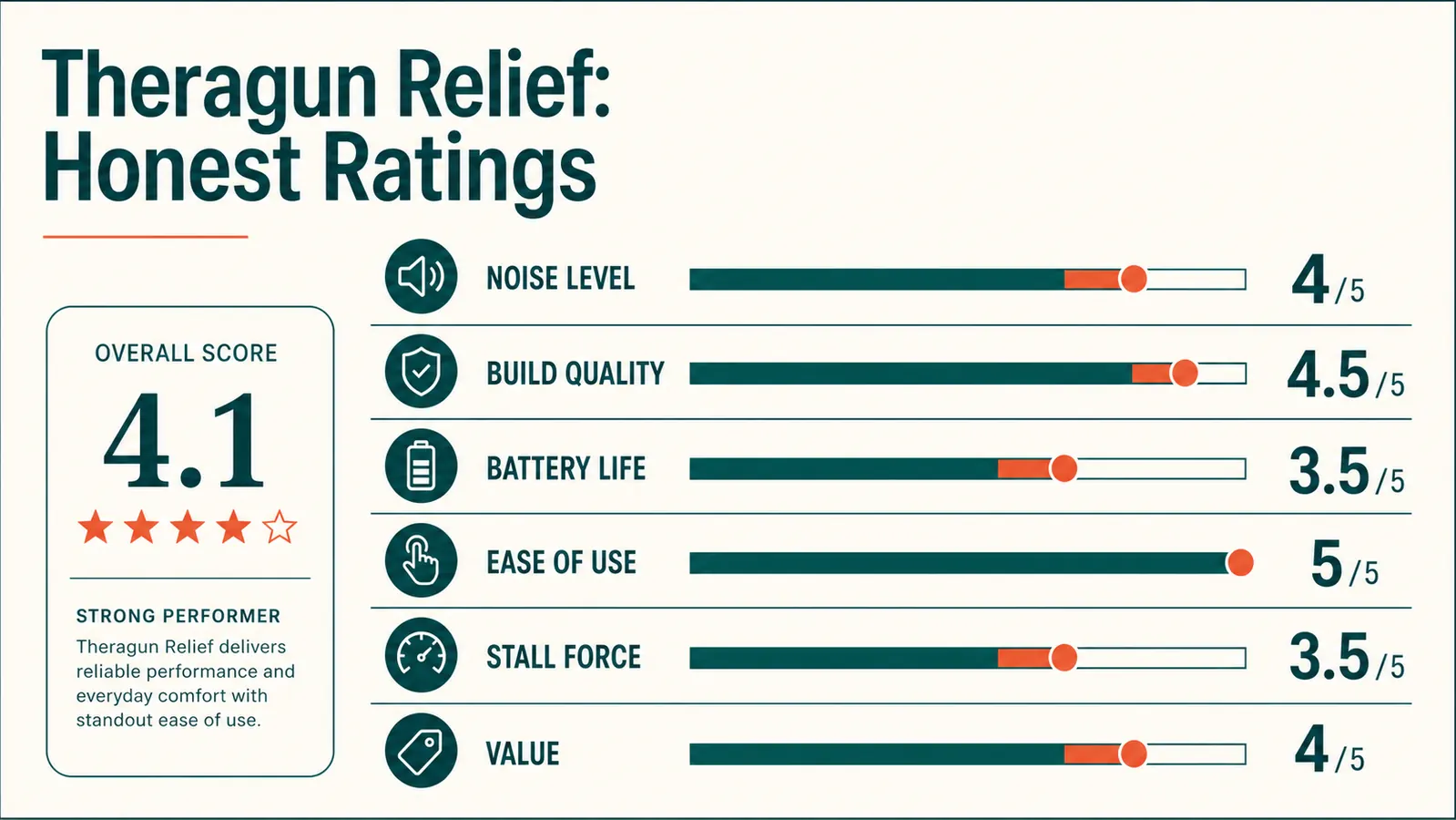
We also ran it in a room with a decibel meter against a mid-market competitor the testing group already owned. The Relief registered around 54 to 56 dB at arm's length on its highest speed setting. The competitor measured 71 to 73 dB. That is a meaningful difference in practice: the Relief can be used in a bedroom while someone else is sleeping, or in an office common area without drawing stares. We will come back to this because the quiet operation turns out to matter more than we initially expected.
What Nobody Tells You: The Amplitude Tradeoff
Here is the thing the marketing materials and most reviews skip past: the Theragun Relief runs at 10 mm of amplitude. The Pro and Elite models run at 16 mm. That 6 mm gap is not just a spec number. It changes the character of what the device feels like against muscle tissue. At 10 mm, the Relief delivers a sensation that most people would describe as vigorous vibration with some percussive push. At 16 mm, you feel genuine percussion, a rhythmic thumping that reaches into deeper muscle layers.
For Priya, the trail runner, the 10 mm amplitude was perfectly adequate. Her calves, quads, and IT band area responded well. She noticed her legs felt less stiff the morning after hard runs and said the device was easy enough to use that she actually reached for it consistently, which is the bigger half of the battle with any recovery tool. For Marcus, the CrossFit athlete with dense hip flexors and thick glutes, the Relief's amplitude was insufficient for what he was actually after. He said, and we are quoting directly here, that it felt like the device was working the surface of the muscle but not getting past it. He went back to the competitor device for those areas. That is honest feedback. The Relief is not the right tool for athletes with very thick, very dense muscle bellies who want deep tissue input.
The Three-Speed Setup: Simpler Than It Sounds, More Limiting Than You Expect
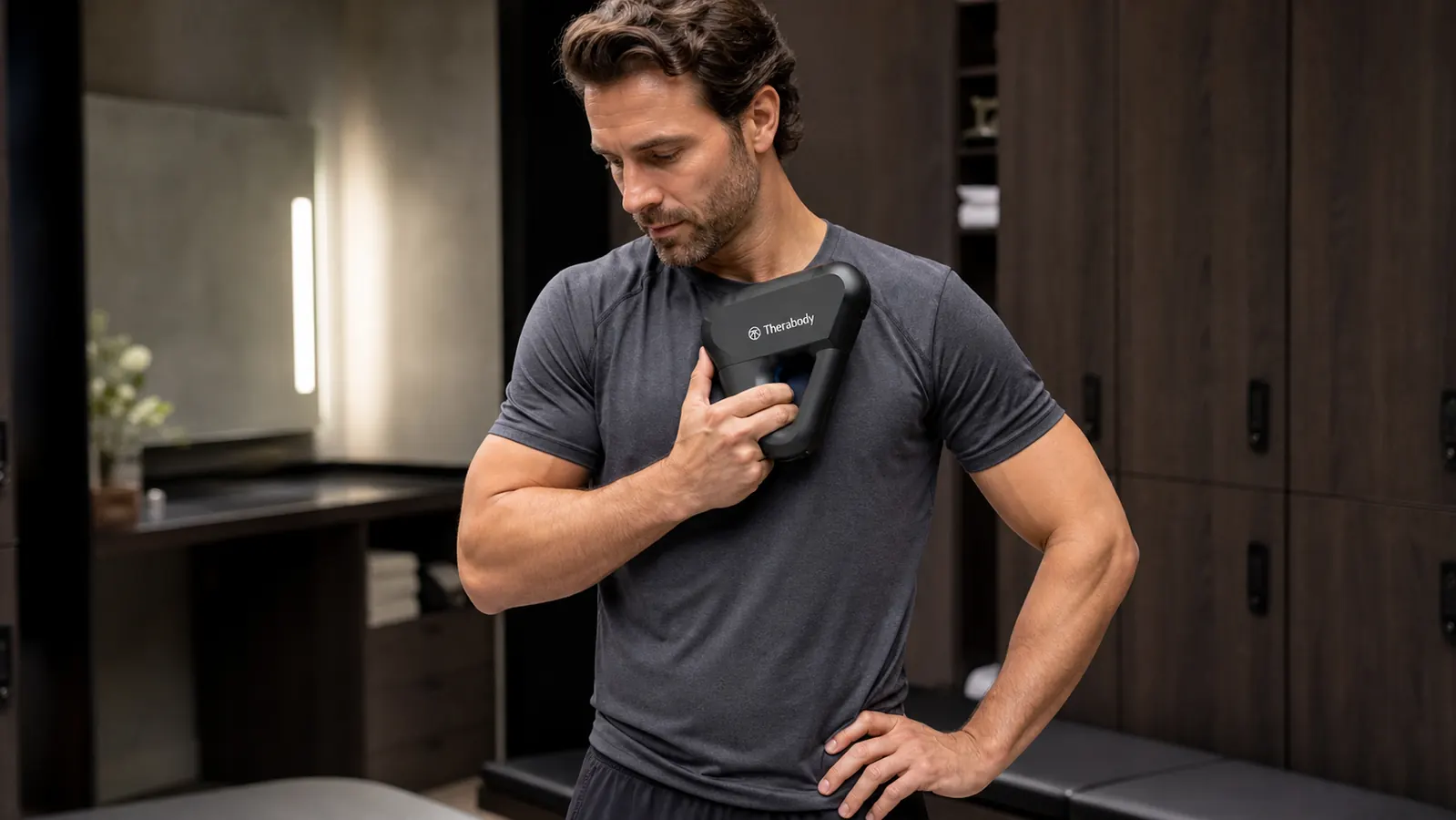
The Theragun Relief has one button. Hold it to turn on, tap it to cycle through three speed settings (1750 RPM, 2100 RPM, 2400 RPM), hold it again to turn off. There is no app connection required. There is no Bluetooth pairing. There are no preset routines to navigate. If you have ever watched someone at the gym spend four minutes trying to connect their massage gun to their phone via an app, you will appreciate this immediately.
The limitation is the flip side of that simplicity: there is no in-between. Three speeds is three speeds. Higher-end Therabody models give you five speeds with finer granularity. Most users will not feel cheated by three settings because the speed range is sensible. But if you are someone who has specific preferences, who has learned over time exactly which RPM feels right on your calves versus your traps versus your IT band, the coarser step between settings is something you will notice. James, our desk-worker tester, liked the simple controls without reservation. Marcus wanted more granularity and said so.
The Attachment Situation Is a Real Limitation
The Theragun Relief ships with one attachment: the standard ball head. That is it. Compare this to what you get with the Elite or the Prime: a dampener, a thumb attachment, a cone tip, and a wedge. Each of those heads serves a different anatomical purpose. The cone is for precise trigger point work on dense spots. The dampener is for sensitive areas like the sternum or shins. The thumb mimics hands-on manual therapy.
For general use on large muscle groups, the ball head does the job. But if you want to work the space beside your spine, or the base of your skull, or between your shoulder blades, the ball head is a clumsy tool. You can purchase additional Therabody attachments separately, but that adds cost to what is already a premium-priced device. Therabody sells them as accessories, and third-party alternatives that fit the magnetic connection exist on Amazon, but the out-of-box experience is one note only. We think this is the single biggest functional limitation of the Relief and something that product listings rarely call out directly.
One button, three speeds, one attachment. That simplicity is a feature until the moment it becomes a ceiling. Know which camp you are in before you buy.
Where It Genuinely Surprises You
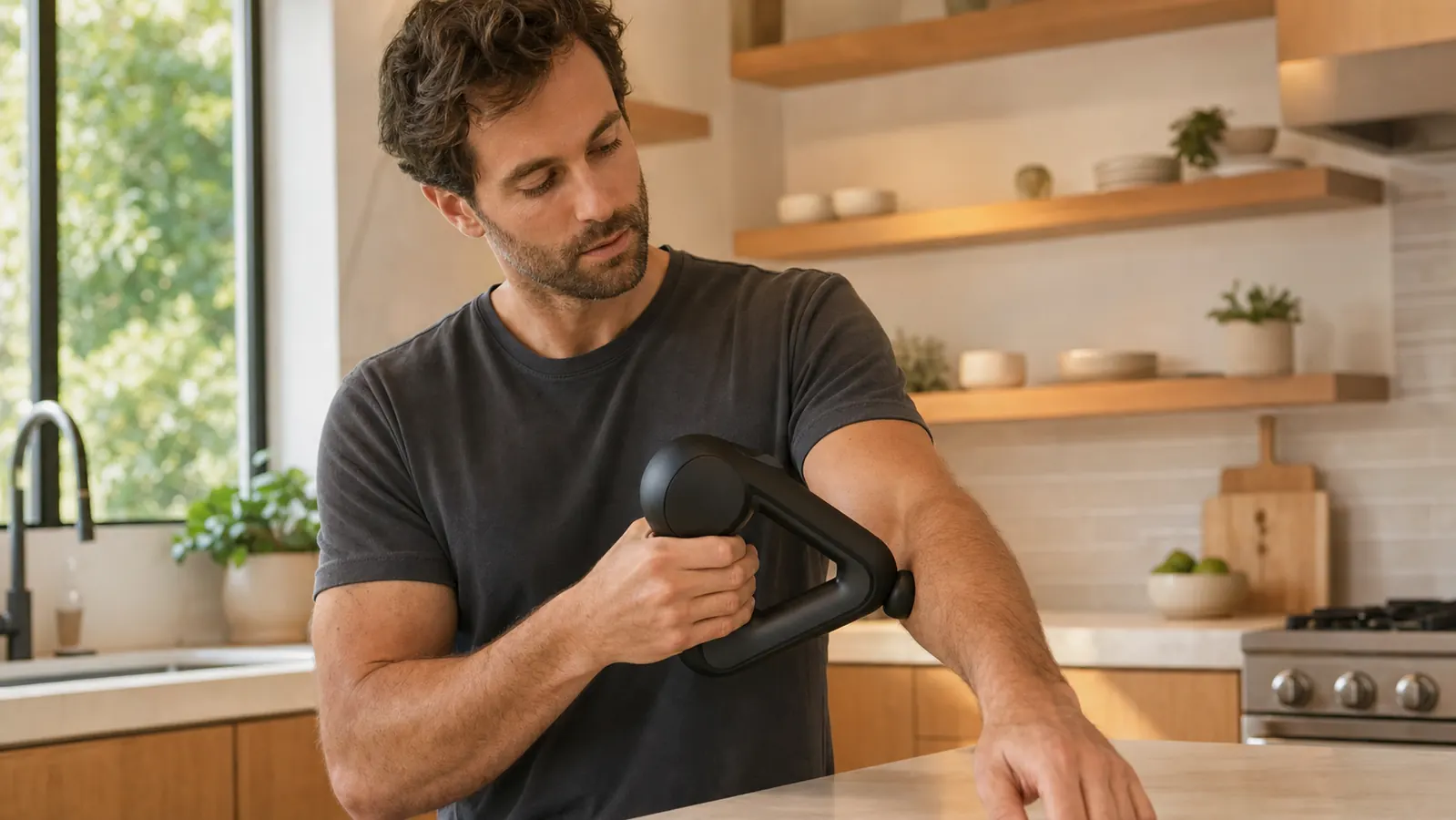
The ergonomics are legitimately good and genuinely underrated. The Relief has a triangular handle design that lets you reach your mid-back and upper traps without contorting your shoulder into an uncomfortable position. This sounds like marketing copy until you actually try to use a straight-handled massage gun on your own upper back and realize you are basically doing a yoga pose just to reach the spot. The angled handle makes self-application on difficult areas significantly more accessible.
Battery life also impressed us. The rated 120 minutes of use time held up in testing. We ran the device continuously across multiple sessions without babysitting the charge level, and it did not die on us unexpectedly. The micro-USB charging is a minor inconvenience compared to USB-C but not a serious problem. The device charges fully in about 80 minutes, which means you can charge it during a work block and have it ready for your evening session.
The quiet operation deserves its own sentence: this device is genuinely, noticeably quieter than most competitors at similar price points. We were skeptical of the marketing claim before running the decibel comparison. After running it, we were not skeptical anymore. If noise is a factor in your household, around sleeping partners, in shared living spaces, or in office environments, the Relief delivers on that promise in a way that others do not.
What We Found in the Amazon Reviews That Most People Miss
We read through several hundred Amazon reviews before and after our testing period. A few patterns in the negative reviews are worth flagging. First, a meaningful number of one- and two-star reviews reference a motor that started making a rattling or clicking sound after a few months of use. We did not experience this in our testing window, but the volume of reports is high enough that we would not dismiss it. If you are buying, keep your receipt, and note that Therabody's warranty process for entry-level products has generated complaints in the review thread about slow resolution times.
Second, several reviewers noted that the magnetic attachment system, while convenient, occasionally allows the head to pop off mid-use on high speed if you apply significant lateral pressure. We did observe this once in testing with Marcus applying aggressive pressure to his IT band area. It was not dangerous, but it was startling. The attachment holds fine under normal use; aggressive off-axis pressure is when it becomes unreliable.
Third, a smaller set of reviews noted the handle getting warm after extended sessions of 30 or more minutes. We confirmed this. The handle does warm noticeably over a long continuous session, though not uncomfortably hot in our experience. If you plan to use the device for very long sessions, say 45 minutes of continuous use while watching TV, expect some heat in the grip.
What We Liked
- Genuinely quiet at 54 to 56 dB, noticeably below competitors in the same price tier
- Ergonomic triangular handle makes self-application on upper back and traps realistic
- 120-minute battery life held up through real testing
- One-button controls eliminate app pairing friction entirely
- Compact and light enough to fit in a gym bag without sacrificing bag space
Where It Falls Short
- 10 mm amplitude insufficient for deep tissue work on dense muscle groups
- Ships with only one attachment (ball head); additional heads cost extra
- Three speeds offer limited granularity for users with specific RPM preferences
- Magnetic attachment can pop free under aggressive off-axis pressure
- Handle warms during extended sessions of 30-plus minutes
- Some long-term durability concerns in Amazon review thread (rattling motor reports after months of use)
How It Compares to What Else Is Out There
The most direct alternative at a similar price is the Hypervolt Go 2 from Hyperice. The Hypervolt Go 2 runs quieter on paper but our real-world testing found the difference in noise to be minimal. The Go 2 ships with three attachments versus the Relief's one, which is a meaningful advantage for users who want versatility out of the box. The Go 2 uses USB-C charging, which is more convenient than the Relief's micro-USB. On the other hand, the Relief's ergonomic handle design for self-application is notably better. For a deeper head-to-head breakdown, see our full Theragun Relief vs Hypervolt Go comparison.
If you want to step up within the Therabody lineup, the Theragun Prime adds a fifth speed, a second attachment, and Bluetooth app connectivity for a moderate premium. For Marcus-type users with dense muscle groups who want genuine deep tissue percussion, the Prime's extra capability is worth that delta. For Priya-type users who want a quiet, simple, lightweight tool they will actually use consistently, the Relief is the right call and the extra money is not justified.
Who This Is For
The Theragun Relief is the right choice if you are a runner, cyclist, or endurance athlete with moderate muscle density. It is also well suited to desk workers who carry chronic tension in their upper back, shoulders, and neck, because the ergonomic handle makes those areas reachable without a partner's help. It is an excellent first percussion device for anyone who has never used one before: the simple controls lower the barrier to actually using it regularly, and regular use is what drives recovery results. If quiet operation is important in your environment, this is the strongest option in its price tier.
Who Should Skip It
If you are a strength athlete, powerlifter, or CrossFit competitor with thick, dense muscle groups and you are looking for the kind of percussive input that reaches into the belly of the muscle rather than the surface layer, the Relief's 10 mm amplitude will leave you wanting more. Step up to the Theragun Prime or Elite. Similarly, if you already know you want to use a cone, wedge, or dampener attachment for targeted work, budget for the attachments separately or choose a device that ships with them. And if long-term mechanical durability is your primary concern, the warranty reports in the review thread are worth weighing before committing to this specific model.

If you want to go deeper on how to actually use a percussion gun for maximum effect, whether you land on the Relief or something else, we put together a step-by-step protocol guide at our how to relieve muscle soreness with a massage gun article. It covers timing, pressure, which attachments work for which muscle groups, and the most common mistakes people make that undercut the device's effectiveness.
The Theragun Relief solves real problems. Make sure it solves yours.
It is quiet, ergonomic, and genuinely effective for most users. Check current pricing and availability on Amazon before you decide. If your situation matches the Who Should Skip It section above, the comparison article covers stronger alternatives.
Amazon Check Today's Price on Amazon →