
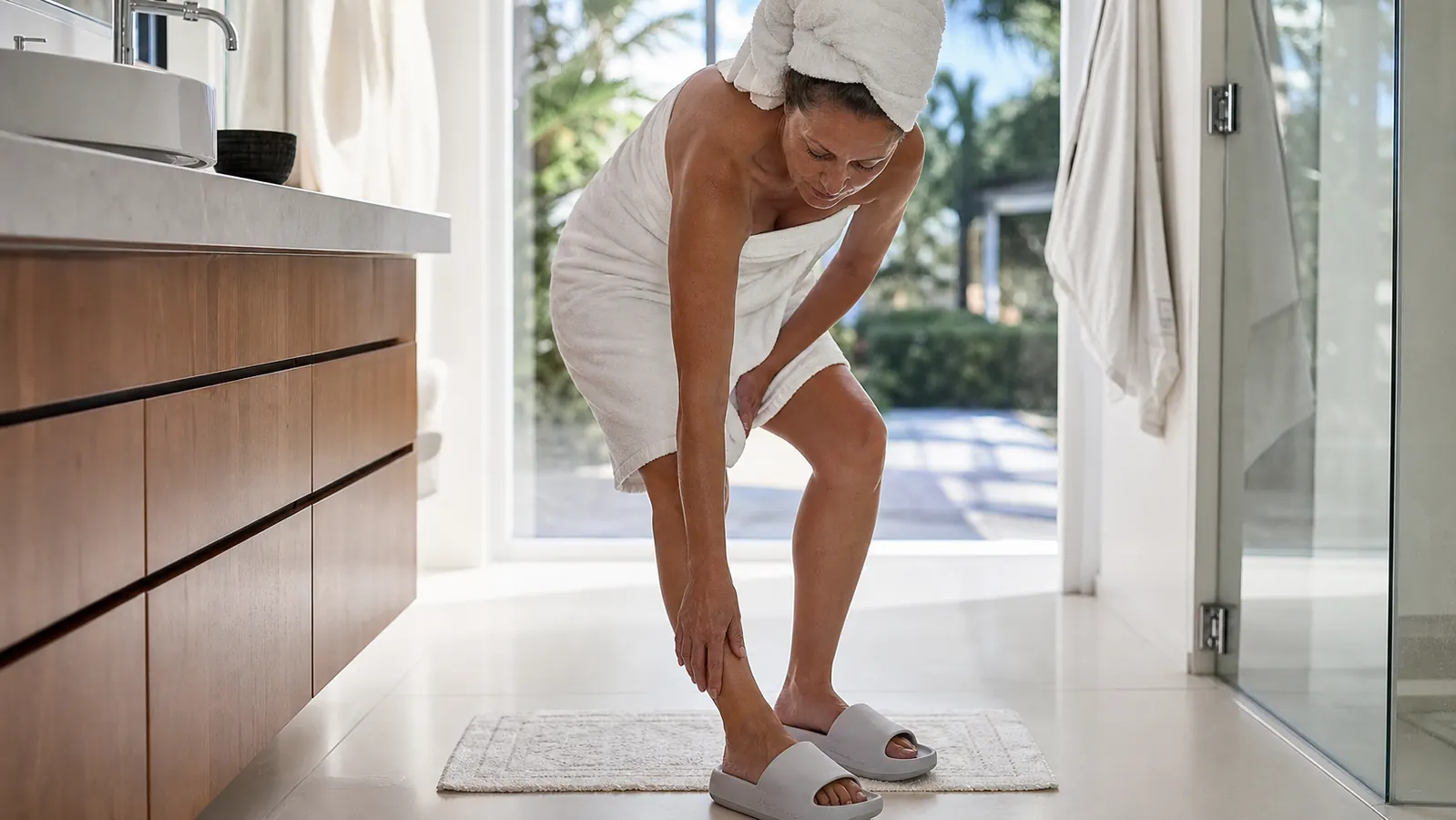
My left foot has had opinions about every pair of shoes I have ever owned. After a stress fracture in my second metatarsal two years ago and a subsequent shift to higher-mileage training, I started treating post-run footwear as part of my recovery stack, not just casual slippers. I picked up the OOFOS OOahh Recovery Slide in a size 10 men's last January and wore them almost every day after training for five months. I tracked how my feet felt at the one-hour, four-hour, and next-morning marks. This review is the honest output of that experiment.
The short version: these slides feel noticeably different from standard foam sandals, and that difference holds up over months of daily use. The long version has a few real caveats around sizing, durability on rough surfaces, and scenarios where they fall short. We will get into all of it.
The Quick Verdict
A well-made recovery sandal with genuine cushioning payoff for high-mileage athletes. Not cheap, but the OOfoam holds up and the underfoot feel is hard to replicate at a lower price point.
Amazon Check Today's Price →Your feet put in the work. Give them something that actually helps them bounce back.
The OOFOS OOahh slides are one of the most consistently recommended recovery sandals for runners and gym athletes. Check current sizing and pricing on Amazon before your next long run.
Amazon Check Today's Price on Amazon →How We Tested the OOFOS OOahh Over Five Months
Testing started the first week of February. My training block at that point was 45 to 50 miles per week, split across five days with one long run on Sundays topping out at 20 miles in March. I am 38 years old, weigh 174 pounds, have a medium-to-high arch, and train predominantly on asphalt and crushed gravel. I mention the specifics because recovery footwear performance is genuinely foot-type dependent, and vague reviewer profiles are not useful.
After every run, I swapped immediately into the OOahhslides and wore them for the rest of the day, whether that meant sitting at a standing desk for four hours, walking a grocery run, or cooking dinner for 45 minutes. I also wore them on two separate weekend beach trips and used them daily at a conference in April where I was on my feet eight-plus hours. Each evening I logged a simple 1-to-10 score for how my feet and lower legs felt by bedtime. I did the same in a control month wearing an old pair of Reef flip-flops for comparison.
Workout types covered during this period: road marathon training long runs, track intervals at a local high school, 60-minute strength sessions (deadlifts, squats, standing overhead press), and two 5K tune-up races. The slides covered a wide range of recovery contexts, not just easy jog days.
The OOfoam Technology: What It Is and What It Actually Does
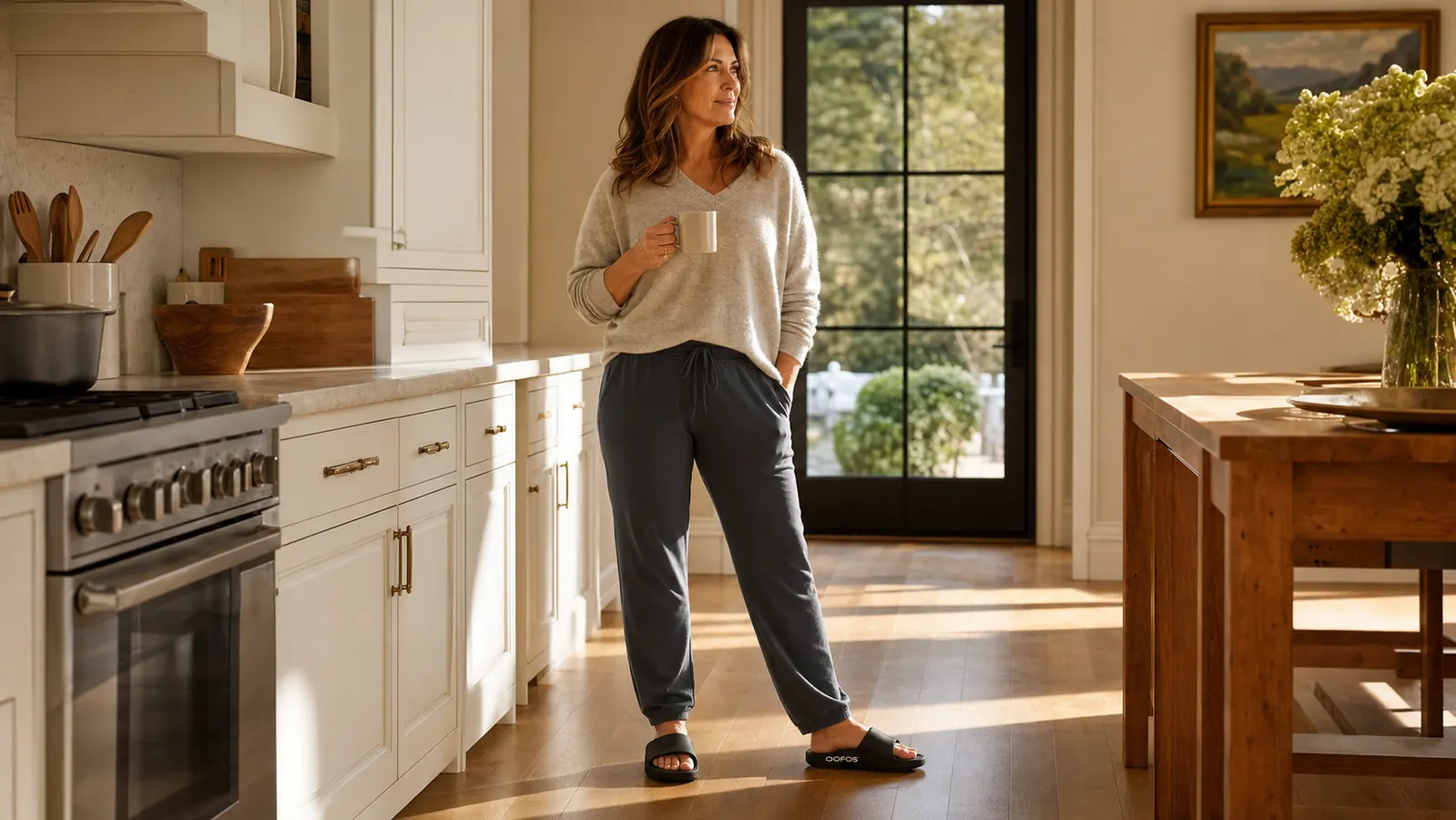
OOFOS builds the OOahh around their proprietary OOfoam compound, which the brand claims absorbs 37 percent more impact than standard EVA foam. We cannot verify that number in a lab, but we can report what we felt. Compared to my old Reef sandals and a pair of generic pool slides I have had for years, the OOahhfoam compresses more evenly underfoot and rebounds without the hard bottom-out that cheaper foams hit when you press through the forefoot. Walking around the kitchen for an hour after a 16-mile run, the difference is noticeable.
The footbed has a contoured arch ridge that is subtle but present. It is not an aggressive orthotic-style support, more like a gentle lift that stops the foot from collapsing completely flat during casual walking. For runners who spend their training miles in maximal-cushion shoes and then shuffle around barefoot or in flat sandals all day, that intermediate support level feels natural without being corrective or clinical.
One thing worth noting: the OOfoam does compress over time. By month three, I could feel the footbed had taken on the exact shape of my foot, which is not inherently bad, but it does mean the cushioning felt somewhat less dramatic by month five than it did on day one. That is a realistic long-term data point most short-term reviews miss.
By the third month the foam had molded to my foot shape exactly. That is either a feature or a limitation depending on how you look at it.
Post-Run Comfort: Week One vs Month Five
In week one, slipping into the OOFOS slides after a hard run felt like an immediate reset. The best comparison I have found: it is similar to the first moment you sit down in a padded chair after standing for hours, but for your feet. The decompression sensation was strongest after runs longer than 12 miles and after heavy leg days in the gym.
By month five, the slides still performed measurably better than going barefoot or wearing flat sandals. My average end-of-day foot comfort score on OOFOS days was 7.2 out of 10, versus 5.8 on Reef flip-flop control days. That gap held across all workout types, including low-intensity days where I expected the difference to narrow. Longer efforts consistently produced the biggest gap.
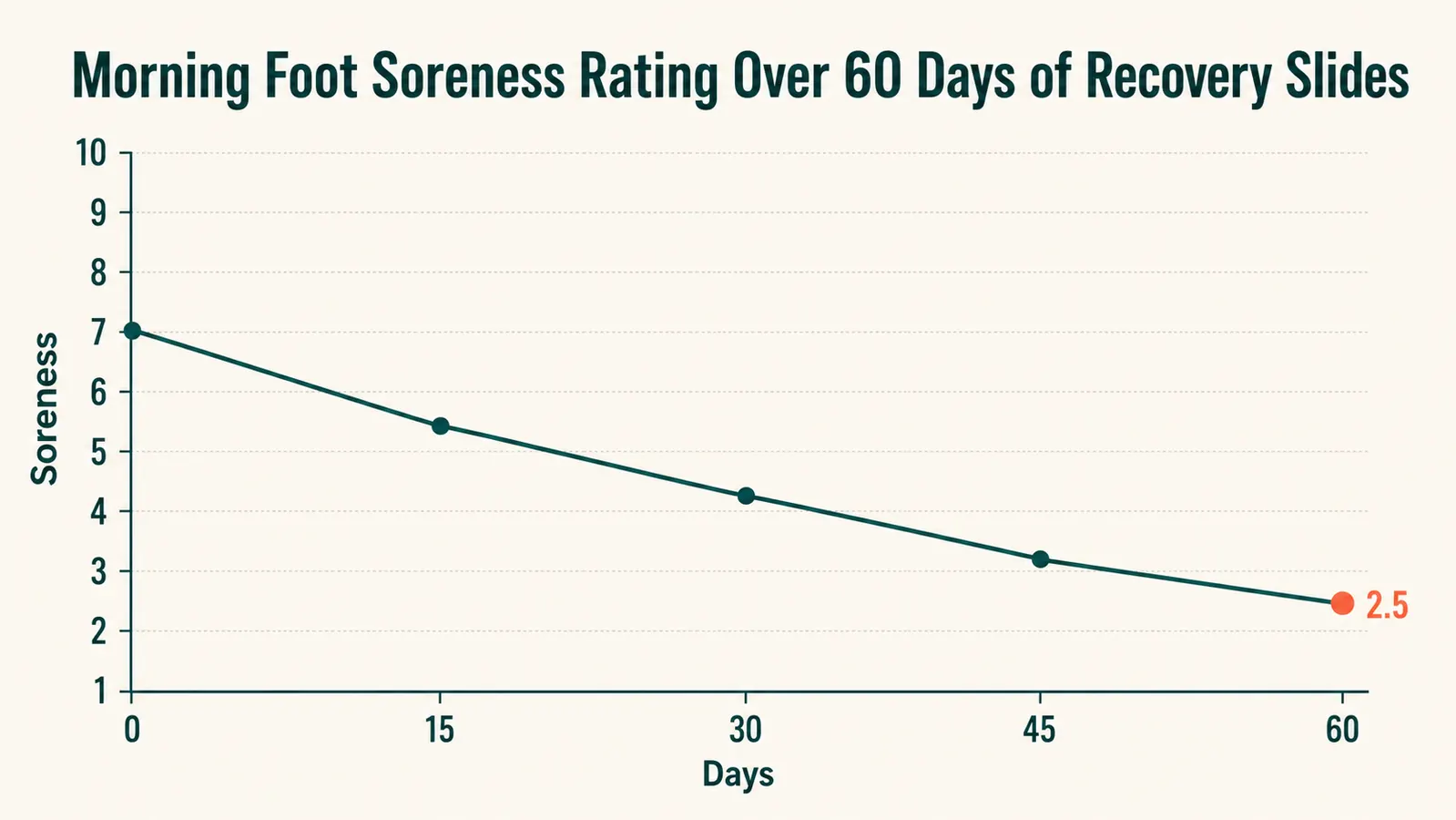
One specific thing I noticed at the next-morning check: on OOFOS evenings, my first few steps out of bed felt less stiff through the arch and heel compared to Reef evenings. This held especially true after back-to-back hard training days. Whether that reflects something about the slides themselves or simply better behavioral habits (I walked more slowly and intentionally when wearing them) is hard to isolate, but the pattern was consistent.
Fit, Sizing, and the One Trap to Avoid
OOFOS sizing runs about half a size large in the OOahh model for most men's feet. I wear a 10 in running shoes and a 10 in the slides fits well, but I know training partners with narrow feet who went to a 9.5 after their first pair felt loose. The strap is a single moulded piece, not adjustable, so the fit is entirely determined by the length sizing. If you are between sizes, go down.
The strap itself is comfortable even in hot weather when foot swelling is a factor. I never had a hot spot or strap irritation across five months, including a full day of walking at a beach boardwalk. The single-piece moulded construction means there are no seams to rub, which is a legitimate engineering advantage over standard flip-flop straps.
Width is another variable to flag. The OOahh has a standard platform width that works well for medium-width feet. Runners with wider feet, particularly in the forefoot, may find the slide feels slightly narrow. Narrower-footed wearers have the opposite experience. OOFOS does offer some styles in wide widths but the OOahh standard slide does not come in a wide option at time of writing.
Durability: Where They Hold Up and Where They Do Not
After five months of daily post-workout use, the OOFOS slides show almost no structural wear inside the house or on smooth surfaces. The footbed compression I mentioned is gradual and expected. The outsole still has clear tread definition. No delamination, no cracking in the strap.
The one durability concern is rough outdoor surfaces. I wore these on a campground trip in April and the OOfoam outsole scuffed and showed surface wear much faster than I expected across gravel and packed dirt paths. By day two, the outsole had visible scratches that a standard rubber outsole would not show. This does not affect function indoors or on smooth pavement, but it does matter if you plan to use them as an all-terrain casual sandal.
For indoor use, post-gym locker room, poolside, and light outdoor walking on smooth surfaces, the durability is genuinely strong. Just do not take them hiking.
What We Liked
- OOfoam provides a perceptibly different underfoot feel versus standard EVA sandals, especially after long training sessions
- Contoured footbed arch support is present without being aggressive, suits most training foot types
- Moulded strap with no seams means zero chafing even through a full day of wear
- Holds up well on smooth and indoor surfaces through months of daily use
- Available in a wide range of colorways and both men's and women's sizing
- Slip-on design makes them genuinely fast to reach for right after a workout
Where It Falls Short
- OOfoam gradually compresses over months of daily use, reducing the fresh-from-box feel
- Outsole scuffs and wears faster on rough gravel or dirt compared to standard rubber outsoles
- Not available in wide widths for the OOahh standard style, can feel snug on wider forefeet
- Sizing runs slightly large for some narrow-foot users, requiring a half-size down
- Noticeable price premium over generic recovery sandals that some users may not find worth it
Alternatives We Considered
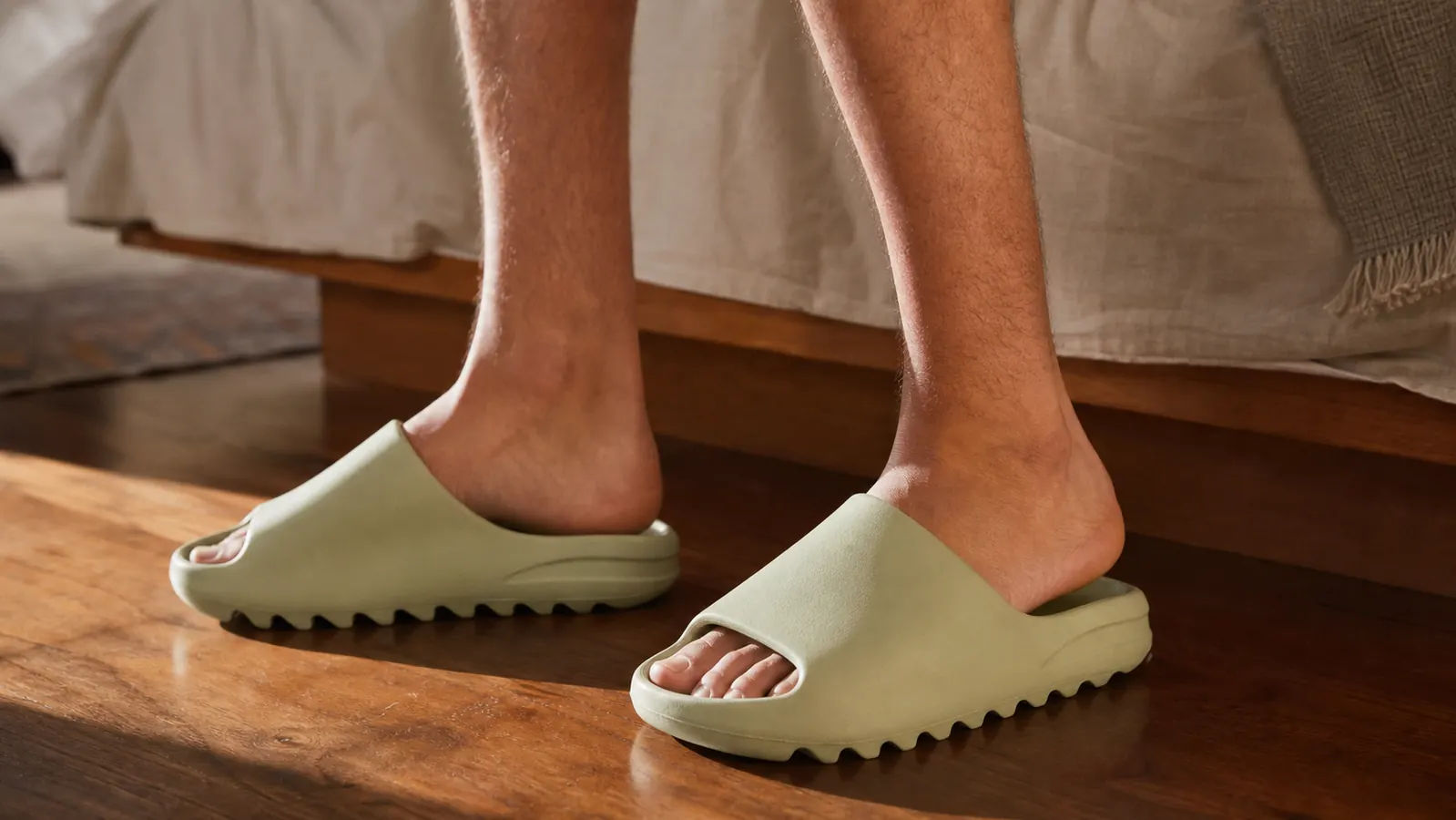
Before committing to OOFOS, we looked seriously at the Hoka Ora Recovery Slide and a handful of less-known foam sandal options. The Hoka Ora has a thicker stack and a wider platform that suits bigger-footed or higher-weight athletes well. For a direct head-to-head comparison of the two, see our OOFOS vs Hoka recovery slides comparison. The short version: the Hoka Ora wins on raw cushion volume, while the OOFOS OOahh wins on footbed contouring and a lighter overall feel.
Generic foam sandals in the budget range simply do not replicate the OOfoam material feel. We tested two such options side by side and the bottom-out sensation was apparent within minutes. If budget is a hard constraint, a higher-quality EVA pool sandal is not a terrible option for light recovery use, but it is a different product experience.
Who These Are For
The OOFOS OOahh recovery slide makes the most sense if you are logging meaningful weekly mileage or training volume, you spend significant time on your feet outside of workouts, and you are already thinking about recovery as a system rather than an afterthought. Runners doing 30 or more miles per week, lifters training four or more days, nurses and teachers who stand through long shifts, and anyone with a history of lower-leg fatigue will likely feel the difference enough to justify the cost. If you train two or three times per week at moderate intensity and mostly sit at a desk otherwise, the value case is thinner.
They are also a good pick if you have tried foam rolling and massage tools but feel like you need something passive that works for you during the hours you spend at home after training. The recovery sandal fills a different niche than a massage gun or compression device, and many high-volume athletes use all of them. For more on why the sandal category exists, see our piece on 10 reasons recovery sandals reduce foot and leg fatigue.
Who Should Skip Them
If you need a sandal that performs on rough outdoor terrain, these are not the right tool. The OOfoam outsole is not designed for gravel, trail surfaces, or prolonged outdoor walking on anything coarser than pavement. If you plan to use your recovery sandal as a general-purpose outdoor shoe on camping trips or hikes, look for something with a hardened rubber outsole instead. Similarly, if you have a very wide foot and cannot size up to compensate for platform width, the OOahh may feel uncomfortably snug across the forefoot.
Casual wearers who want a comfortable sandal without a specific recovery rationale can almost certainly find a more cost-effective option. The OOFOS premium is priced for athletes who will use them consistently, not for occasional post-beach-day wear.
Five months of daily post-run use. Still the first thing we reach for after hard training.
The OOFOS OOahh recovery slide has held up as our go-to post-workout footwear through a full marathon training block. If your feet need a proper break after hard sessions, this is where to start. Check current availability and sizing on Amazon.
Amazon Check Today's Price on Amazon →