

My right heel started talking to me in March. Not loudly at first. Just a tight, hot ache that showed up for the first twenty steps after I rolled out of bed. I'm a triathlete. I've been training for my first Ironman for eighteen months. And I'll be honest with you: I ignored it for six weeks longer than I should have. The thing that finally took the pressure off my feet between sessions turned out to be a pair of recovery sandals, and I almost did not try them.
By May, those twenty steps had turned into fifty. Getting from the bedroom to the bathroom felt like I was walking across gravel in bare feet. My swim coach finally pulled me aside after a set and said, flat out, that I was compensating in my kick turn. She wasn't wrong. I'd been babying my right foot for so long that my left hip was starting to feel it. The whole kinetic chain was going sideways, and my race was twelve weeks out.
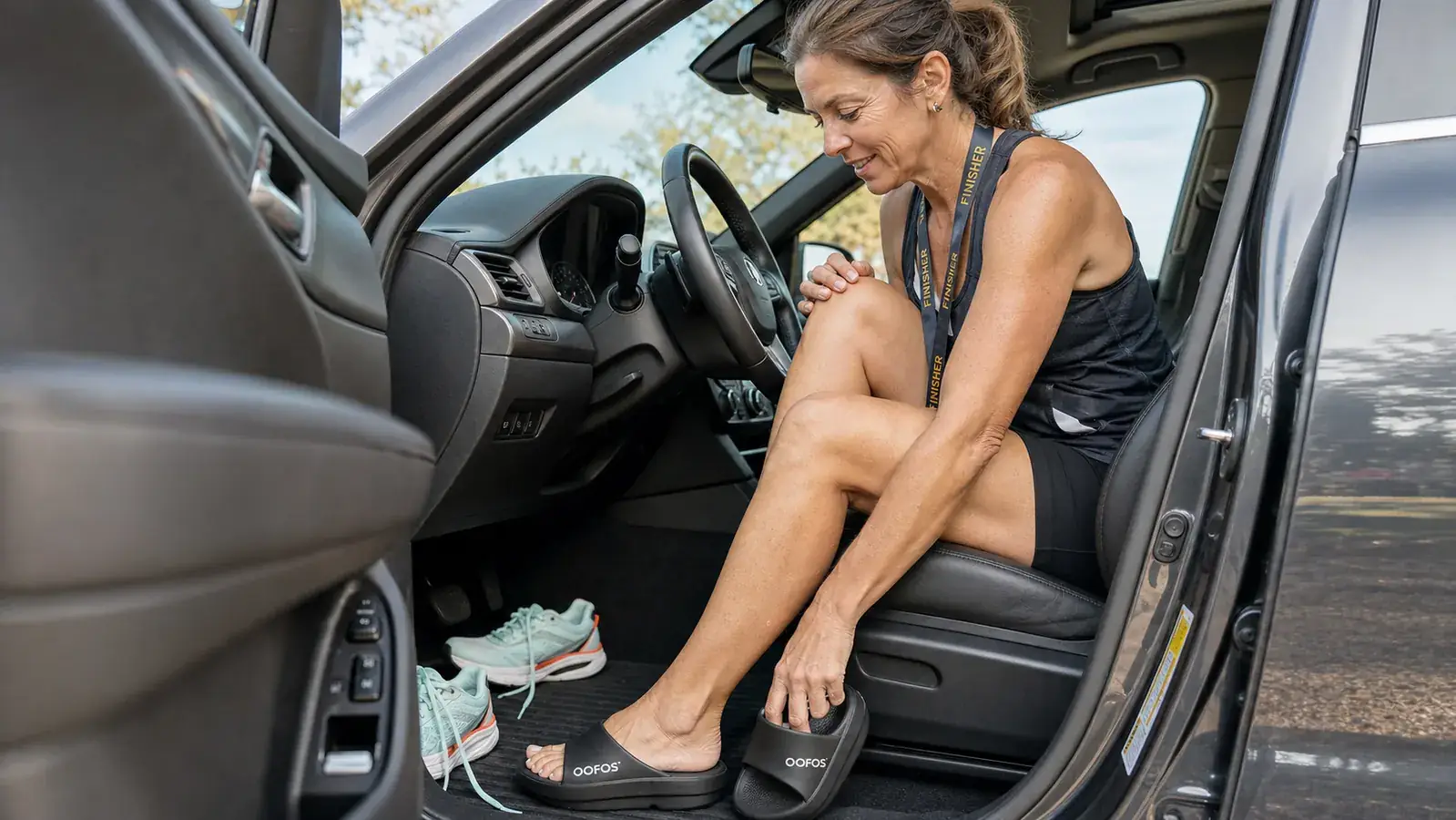
I went to see a sports podiatrist the next morning. She pressed around my heel, watched me walk across the exam room, and gave me the news I'd been dreading: early-stage plantar fasciitis. Not a rupture. Not a stress fracture. But the kind of chronic irritation that, left alone, becomes a six-month problem. She told me to cut my run volume by forty percent, stretch the plantar fascia twice a day, and, most importantly, stop walking around barefoot or in flat shoes between training sessions. She said, and I wrote this down, 'Your foot is stressed when you train. The time between sessions is when it either repairs itself or gets worse. What you put it in during that window matters more than you think.'
I came home and Googled 'recovery sandals for plantar fasciitis.' Forty-five minutes later I ordered the OOFOS OOahh slides. I had looked at Crocs, a couple of sport slides from brands I recognized, and a pair of orthopedic-looking sandals that were more or less just thick foam with a strap. What kept pulling me back to the OOFOS was the arch support built into the footbed. It wasn't a separate insert. It was part of the foam itself, molded at the right spot to sit under the arch without requiring any adjustment. And after reading through a few hundred reviews from other runners and triathletes, I noticed a pattern: people weren't just saying the slides felt nice. They were saying things like 'I can actually walk to the kitchen now' and 'my morning steps are normal again.' That specificity felt trustworthy.
My podiatrist was right. The window between sessions is where the damage either heals or compounds. What you put your foot into during that window is the decision that matters.

The slides arrived two days later. First impression: they look a little chunky. The OOfoam is noticeably thicker underfoot than anything else I owned. I slipped them on and the first thing I felt was the arch catching my foot from below, not in an aggressive orthotic way but in the way a good shoe fits when it's actually designed around a real foot shape. I stood there in my kitchen for a second, waiting for the usual heel complaint. Nothing. I walked to the coffee maker. Nothing. I'll admit I stood there with my coffee, in my slides, being kind of unreasonably grateful.
If morning foot pain is cutting into your training window, this is the first thing I'd change.
The OOFOS OOahh slide has 32,000+ reviews from athletes who use it exactly the way I do: the moment training is done, slides go on. Check current pricing and sizing on Amazon.
Amazon Check Today's Price on Amazon →Over the next two weeks I wore the slides every non-training hour I was on my feet at home. Post-swim, post-bike, before and after runs. I stopped padding around barefoot. I stopped wearing my thin flip-flops to the pool. I wore the OOahhs from the moment I walked back in the door. The change in my morning heel pain was gradual at first, then suddenly obvious. By week three, those fifty painful morning steps were down to maybe eight or ten. By week four, I was pretty much normal.
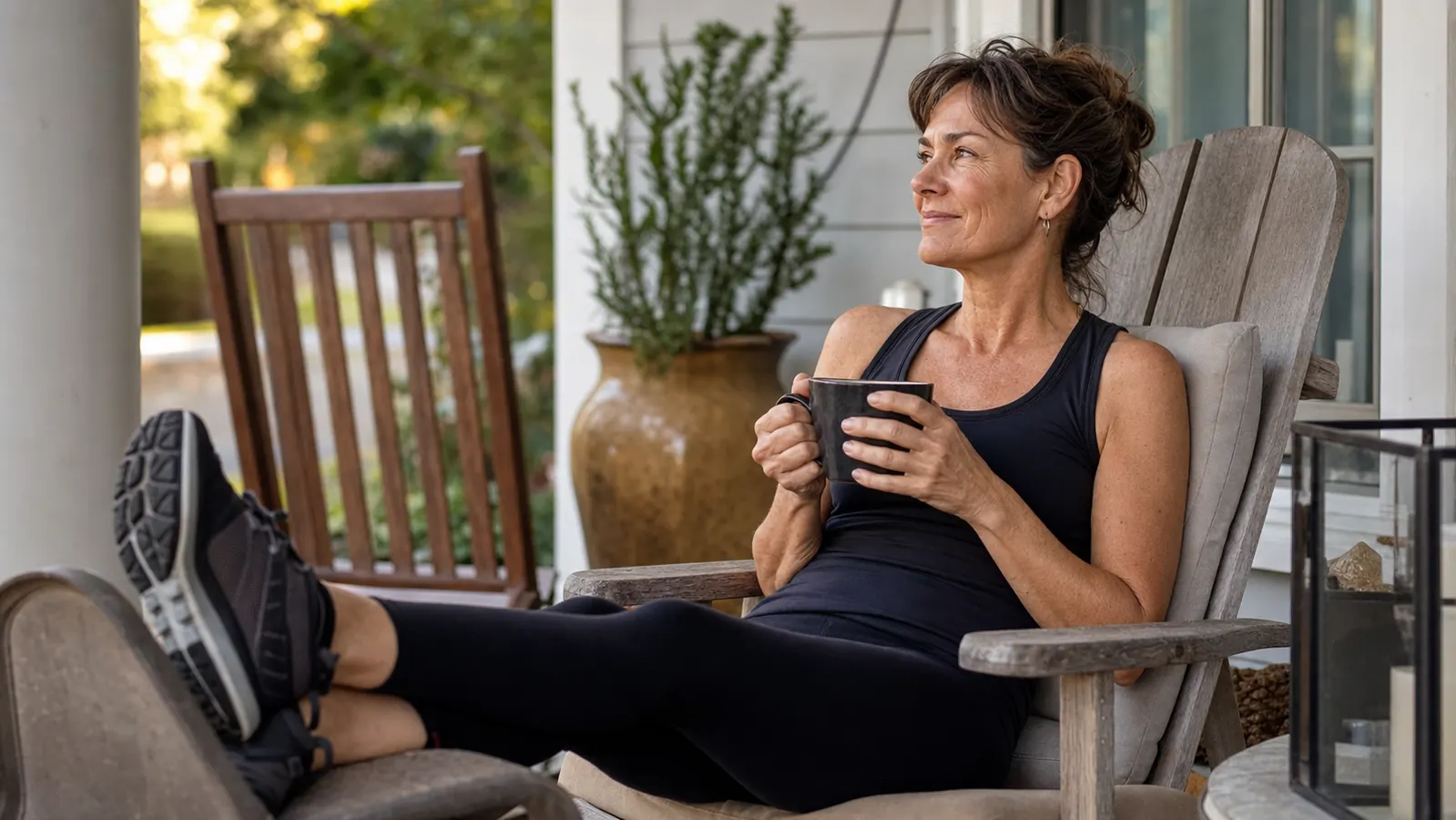
I want to be careful here because I'm not a doctor and I'm not saying slides fixed my plantar fasciitis. I was also stretching every morning, doing the calf-drop protocol my podiatrist gave me, and running less. All of those things were part of it. But the slides addressed something I hadn't thought about: the cumulative stress my foot was absorbing between sessions. Every barefoot step on a hard kitchen floor, every trip to the grocery store in flat sneakers, that was adding load to a tissue that needed rest. The OOahhs reduced that load during the recovery window. That's the actual mechanism.
What I'd Tell You If We Were Sitting at My Kitchen Table
Here's what I know now that I wish I'd known in March. Foot pain in athletes almost never comes from one big event. It comes from accumulated small decisions made during the time you're not training: the floors you walk on, the shoes you wear to the store, whether you stretch before getting out of bed. Coaches talk endlessly about training load. Nobody talks enough about recovery-window load, the stress your body takes on between the sessions. For your feet specifically, that window is where plantar fascia irritation either gets worse or starts to resolve. Hard surfaces plus flat shoes plus no arch support equals more stress than your foot can absorb on top of training. That's how a small ache in March becomes a DNS conversation in May.
The OOFOS OOahh is not a treatment. It's a way of giving your foot something soft and supportive to land on during the hours you're not actively training. If you are dealing with heel pain, see a podiatrist. Do the stretching. Reduce load. But also look at what's on your feet between sessions, because that is absolutely part of the picture. For me, this one change was easier than I expected and more effective than I thought it would be. I finished my Ironman in September. My heel was fine.
The OOFOS OOahh is the slide I now recommend to every training partner who mentions sore feet.
More than 32,000 athletes have reviewed it on Amazon. Available in a wide range of sizes and colors for both men and women. See today's price and check sizing before your next training block.
Amazon Check Today's Price on Amazon →