
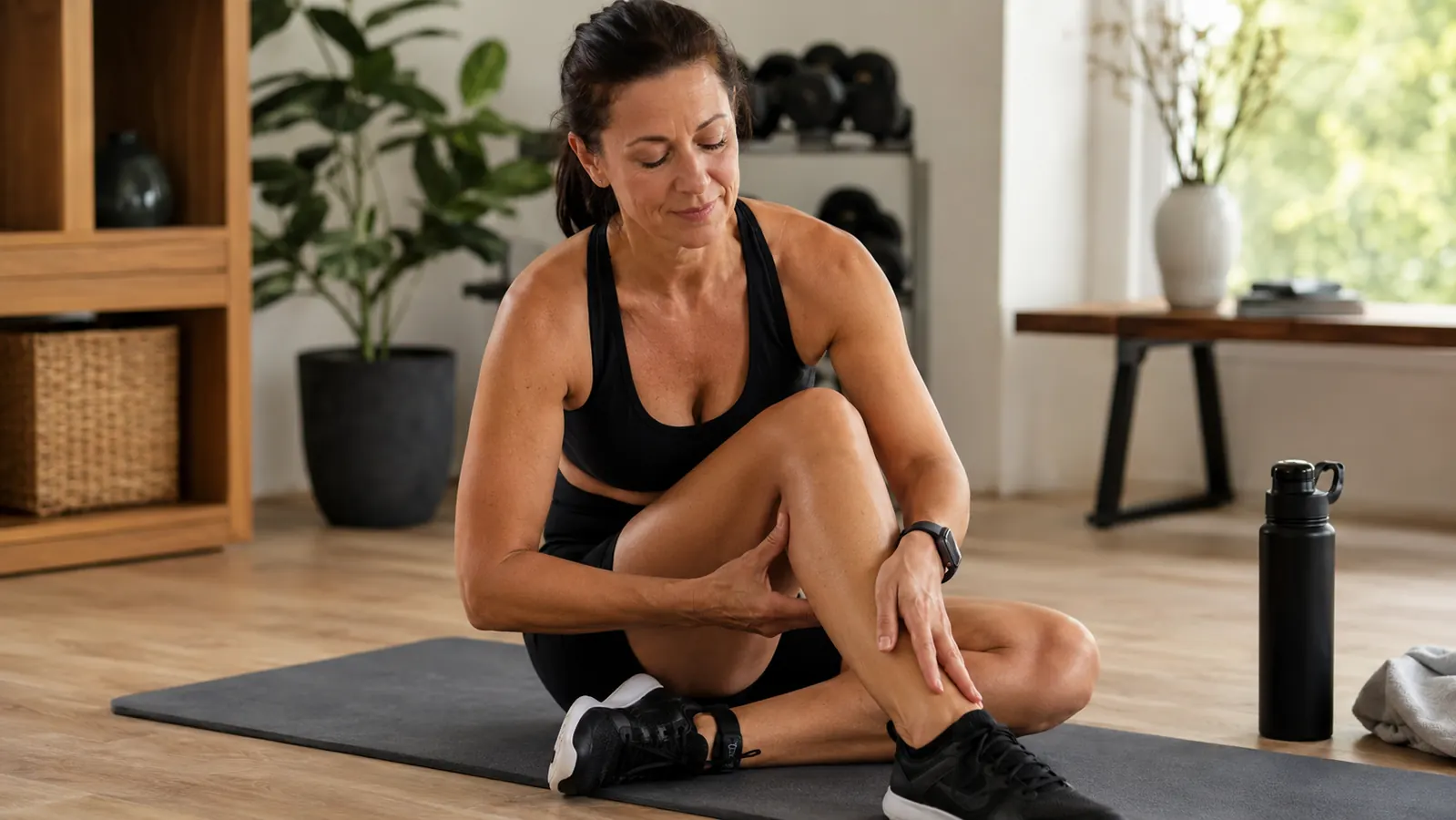
Here is the situation most of us know: you finish a hard training session, your quads feel like someone filled them with wet cement, and somewhere in your gym bag there is a roll-on pain relief gel you picked up months ago. You shake it, roll it on, feel that cooling sensation for about four minutes, and wonder if you did it wrong. The answer is usually yes. Not because the product does not work, but because topical analgesics have a timing window, a technique, and muscle-group logic that most people skip entirely. When you follow the actual protocol, that cooling comfort lasts noticeably longer and the recovery window after training feels more manageable.
This guide walks through exactly how to use a menthol-based topical gel, specifically the Biofreeze Professional Pain Relief Roll-On, to get the most out of every application. We cover pre-application prep, the five-step application protocol, the muscle groups where it makes the biggest difference, and the safety rules you should follow every time. If you are unsure whether a topical analgesic is right for your specific situation, follow the label directions and consult a pharmacist before starting a new routine.
Your post-workout routine is missing one step that takes 90 seconds.
The Biofreeze Professional Roll-On is the same formula physical therapists keep on their treatment tables. At the current price, it is the lowest-cost upgrade to any recovery stack.
Amazon Check Today's Price on Amazon →What Menthol Actually Does (and What It Does Not)
Before the step-by-step, it helps to understand what you are working with. Biofreeze Professional uses menthol as its active ingredient. Menthol activates cold-sensing receptors in the skin, producing a fast cooling sensation that temporarily interrupts the discomfort signal your sore muscles are sending to your brain. That is the mechanism. It is a comfort tool, not a treatment. Topical menthol gels provide temporary relief of minor aches and soreness associated with physical activity. They do not treat, cure, or heal underlying muscle damage, and they do not reduce tissue-level swelling.
That distinction matters because it tells you how to use it correctly. You are not waiting for it to fix anything. You are creating a comfort window, a period where the area feels cooler and less distracting, so you can move more freely through mobility work, get better sleep, or simply feel less beat up between sessions. Used with that framing, topical gels become one of the most useful tools in a recovery stack.
Step 1: Time the Application Correctly
The biggest mistake most athletes make is applying topical gel too late. The cooling sensation builds over the first five to ten minutes and then plateaus. If you apply it two hours after training when you are already sitting on the couch, you are getting comfort at a point in your day when you are not moving anyway. The window you actually want to fill is the first 20 to 30 minutes after training, when you are transitioning from work sets to cooldown stretching or mobility work.
For most athletes, the practical routine looks like this: finish your last set, put away your equipment, and apply the Biofreeze roll-on to target areas before you start your post-session mobility work. By the time you are into your third or fourth stretch, the cooling effect is fully active, which makes it easier to hold positions longer and move through a complete range of motion without fixating on discomfort.
If you train at night, there is a secondary application window: about 15 minutes before bed. The cooling sensation promotes a relaxed, comfortable feeling in worked muscle groups that many athletes find helpful for falling asleep after evening sessions. Do not layer a second application directly on top of the first without washing the area first. Follow the label instructions for maximum daily applications.
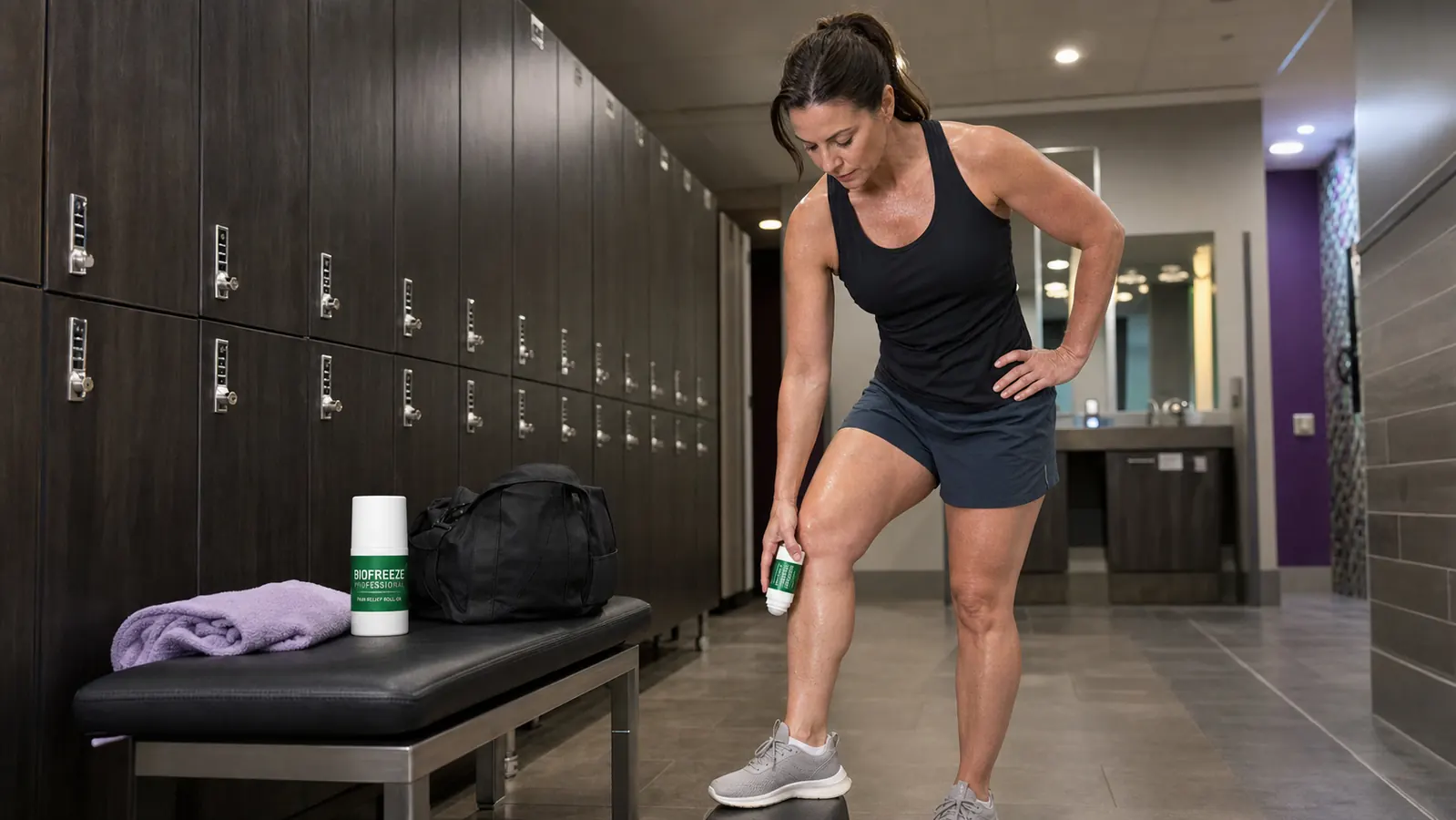
Step 2: Prep the Skin Before You Apply
Skin prep is the step nobody mentions but everyone who has used a topical gel consistently figures out eventually. Clean, dry skin absorbs the menthol faster and holds the cooling sensation longer than sweaty, lotion-covered skin. After training, if you have the option, a quick towel-dry on the target areas before applying makes a real difference in onset speed and duration.
More critically, do not apply Biofreeze or any topical analgesic to broken skin, open cuts, rashes, or irritated patches. The active ingredient is intended for intact skin only, and application to compromised skin can cause significant discomfort. If you are in the middle of a flare-up with chafed skin, blisters, or any kind of abrasion, skip that area entirely and focus the application on the surrounding muscle belly instead.
For athletes new to menthol gels, we also recommend a patch test before a full application session. Apply a small amount to the inside of your forearm, wait ten minutes, and check for any skin sensitivity. Most people have no reaction, but testing once upfront saves you from discovering a sensitivity mid-session on a larger area.
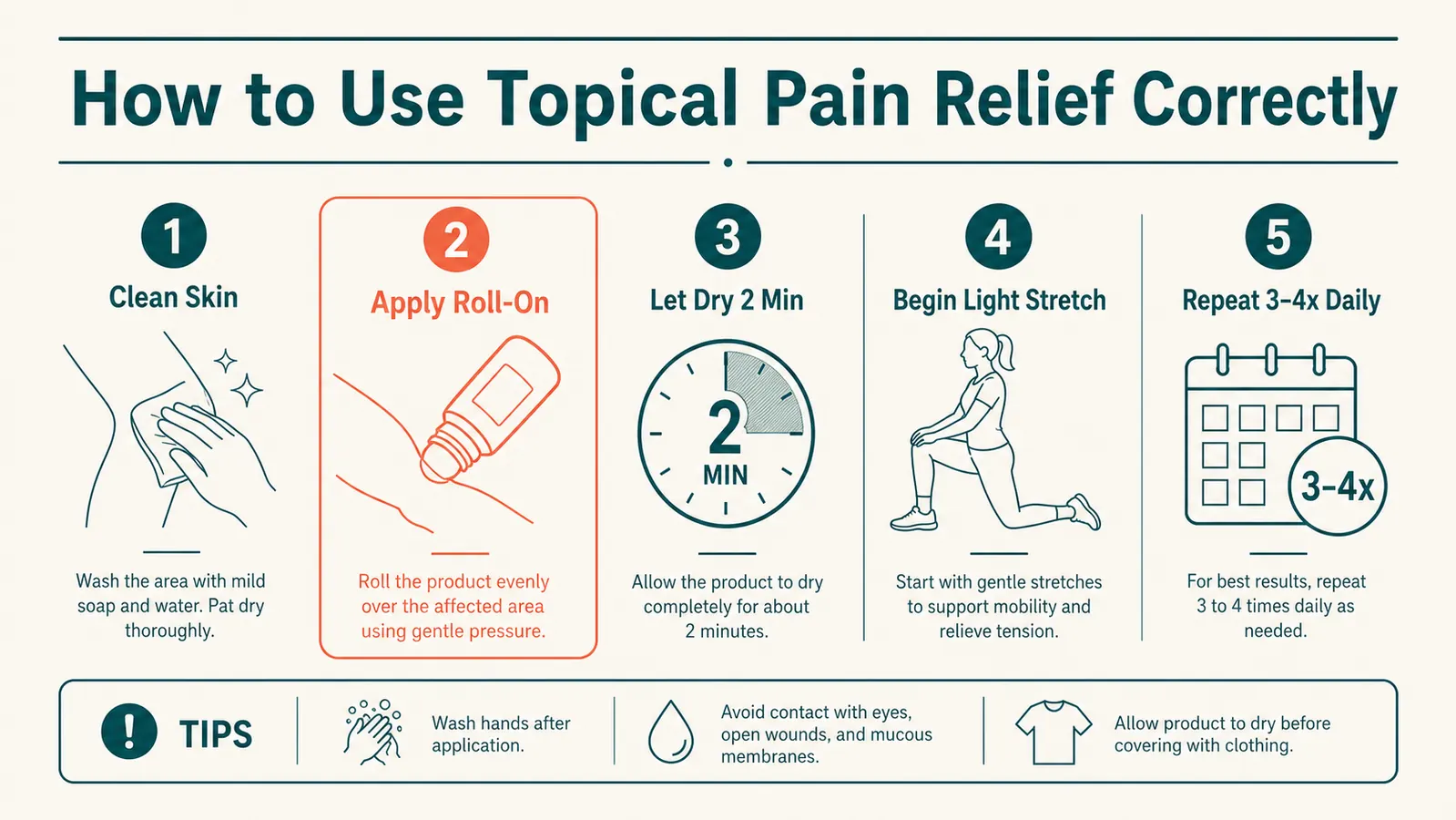
Step 3: Apply Using the Roll-On the Right Way
The Biofreeze Professional Roll-On has a distinct advantage over tube-based gels: no skin-to-skin contact during application, which matters when you are covering large areas or applying to spots you will be working out on shortly after. The ball applicator rolls a consistent amount of product directly onto the target area with no mess and no transfer to your hands.
Apply with slow, overlapping strokes across the muscle belly, not just the epicenter of soreness. For a sore quad, start at mid-thigh and roll upward toward the hip, then back down toward the knee, making sure you cover the full length of the muscle group. For a tight lower back, roll in horizontal stripes across the lumbar region from one side of the spine to the other, staying on the soft tissue rather than rolling directly over the spine. Three to four full stripes across a muscle group is typically enough product. More is not more here; a thin, even coat activates faster and more uniformly than a heavy saturated application.
After applying, do not immediately rub the area with your hands. Let the gel sit for 60 seconds, then gently spread any excess if needed. Rubbing immediately after application risks dragging unabsorbed product onto adjacent skin areas, including areas near your eyes or mouth, which creates a serious irritation risk.
Three to four slow, overlapping strokes across the full muscle belly activates faster and lasts longer than piling on product in one spot. Less is genuinely more with a menthol roll-on.
Step 4: Target the Right Muscle Groups for Each Training Type
Different training styles create soreness in different regions, and matching your application to your actual worked muscles makes a noticeable difference in how useful the cooling window feels. Here is how we map application zones to common training types.
For lower-body training days (squats, lunges, deadlifts, leg press), the priority zones are the quad sweep from hip to knee, the hamstring from the gluteal fold to the back of the knee, and the calf complex. For runners and cyclists, the same lower-body map applies, with extra attention to the gastrocnemius and soleus if you are logging volume. For upper-body training days (pressing movements, rows, overhead work), the priority zones are the pecs, the anterior and lateral deltoid, and the upper trapezius. For back-focused sessions, the lumbar paraspinals and mid-back erectors are the target area.
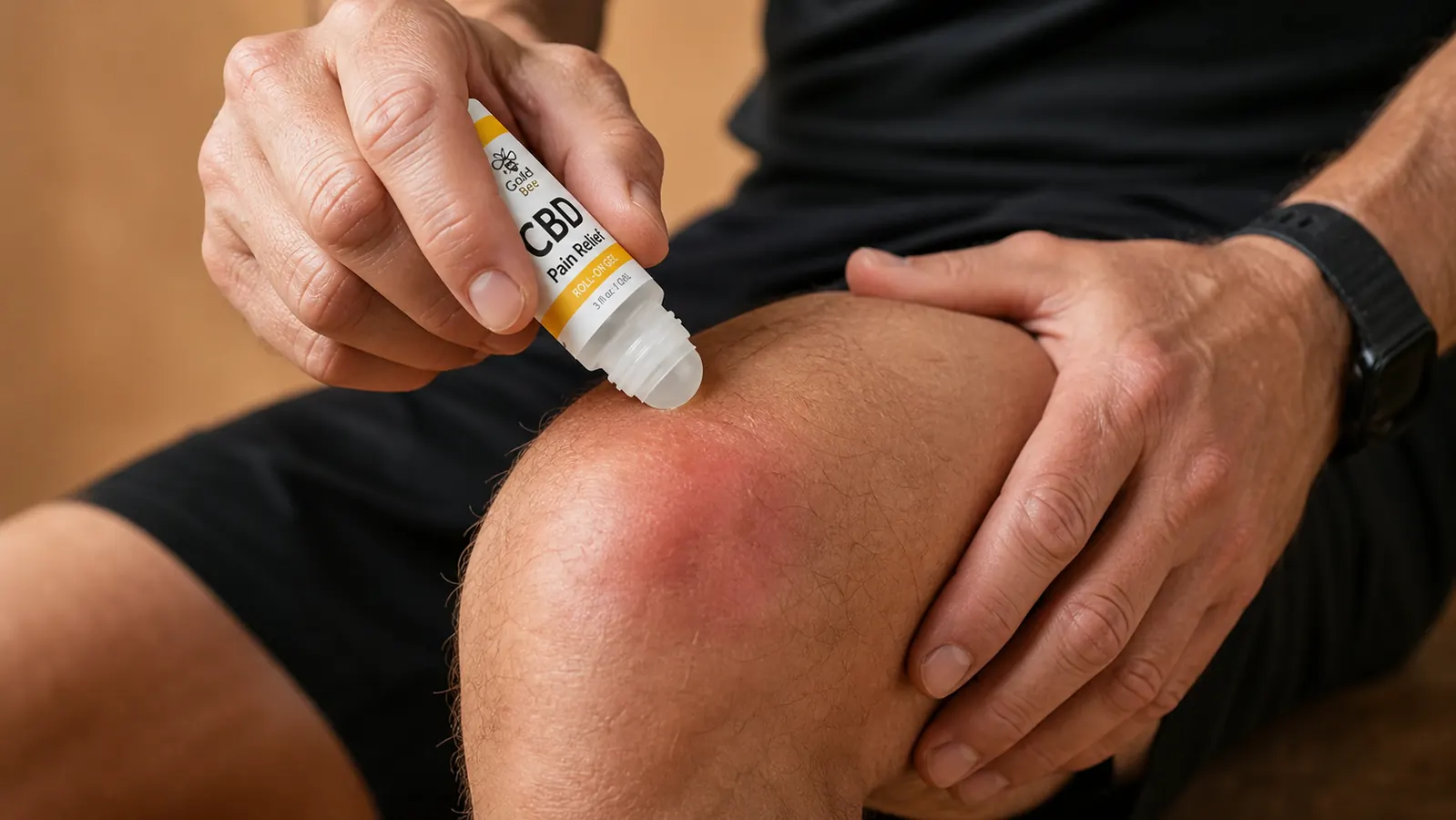
One area worth calling out specifically: the knee joint area. Many athletes with achy knees after squatting find a roll-on application around the patellar tendon and the soft tissue above and below the knee cap to be one of the more reliably useful applications. The roll-on format is especially practical here because it reaches the back of the knee cleanly without requiring you to contort your hand.

Step 5: Wash Your Hands and Observe the Safety Rules
This step is non-negotiable. After any application of a topical analgesic, wash your hands thoroughly with soap and water before touching your eyes, nose, mouth, or any mucous membranes. Menthol-based products cause intense, immediate irritation to eye and facial tissue. This is the number one avoidable incident with topical gels, and it happens most often when athletes apply to their lower back or hamstrings and then casually rub their eyes two minutes later without thinking.
Additional safety rules to follow every time: do not wrap or bandage the application area tightly after applying, as occlusion significantly increases absorption and can cause skin irritation. Do not apply heat (heating pads, hot tubs, saunas) to an area where topical menthol is active. The two sensations combine in a way that becomes quickly uncomfortable. Do not apply to the face, groin, or any sensitive skin area. Keep the product away from children. If you experience a rash, significant skin irritation, or discomfort beyond the normal cooling sensation, discontinue use and consult a pharmacist or physician.
What Else Helps During the Cooling Window
Topical analgesics work best as part of a broader recovery routine rather than as a standalone fix. The cooling comfort window they create, typically 30 to 45 minutes with the Biofreeze Professional formula, is most productive when you are doing something useful with it. Mobility work is the obvious choice. Running through hip flexor stretches, a quad stretch series, or a basic shoulder mobility sequence while the menthol is active makes the entire stretch session feel more accessible.
Sleep is the other major opportunity. For athletes with evening sessions, applying to the primary soreness zones about 15 minutes before bed creates a comfortable, cooling backdrop that many people find makes it genuinely easier to fall asleep and stay comfortable through the first few hours of sleep when acute muscle soreness tends to be most noticeable. If you pair topical application with good sleep hygiene, a consistent bedtime, a dark and cool room, and no screens in the last 30 minutes, you are compounding the recovery benefit significantly.
Foam rolling and massage tools also pair well with topical gels, but the order matters. Use mechanical tools like foam rollers or massage guns first, before application. Rolling over skin that already has menthol gel on it transfers product to the roller and makes subsequent passes uncomfortable in an unpredictable way. Apply the roll-on after your mechanical recovery work, not before.
For internal links to related protocols, see our guides on Biofreeze Professional Roll-On long-term review and 10 reasons topical pain relief is a smarter recovery option than oral NSAIDs for more context on why topical is worth adding to your stack.
Built for physical therapists. Priced for everyday athletes.
The Biofreeze Professional Roll-On has 23,000+ verified Amazon reviews, a 4.7-star rating, and a no-mess roll-on applicator that makes post-workout application take less than two minutes. Check the current price below.
Amazon Check Today's Price on Amazon →