

Six weeks into a new training block last spring, my lower back decided it was done cooperating. Not an injury, just the grinding, stiff soreness that shows up after heavy deadlifts when you are 38 and your recovery is not what it was at 28. I had been using the standard green-tube Biofreeze from the pharmacy for years. A physical therapist I train with mentioned that the professional roll-on version runs a much higher menthol concentration, 10.5% versus the retail product's 3.5%, and that clinics switched to it specifically for faster-onset cooling. I ordered it the same evening. Over the next two months, I applied it to my lower back after every lifting session, to my left knee after longer runs, and to quad and calf soreness after particularly brutal leg days. This is a detailed account of what I actually noticed.
The Biofreeze Professional Pain Relief Roll-On (ASIN B01GZQ4AM6) is widely available on Amazon and carries a rating of 4.7 across more than 23,000 reviews. That kind of volume tells you something. It is not a niche product. But reading all those reviews will not tell you what a higher-menthol formula actually feels like against a sore muscle after a serious training session, or whether the roll-on applicator holds up through two months of daily use without leaking or clogging. That is what I set out to find.
The Quick Verdict
The professional formula delivers noticeably faster and deeper cooling than the retail version. The roll-on format is clean and mess-free. The relief is temporary and surface-level by nature, but for training soreness and minor joint stiffness, it gives you a real window of comfort. Minor gripe: the applicator clogs if you store it on its side.
Amazon Check Today's Price →Still using the drugstore tube? The professional formula has 3x the menthol.
Biofreeze Professional is the same brand, same roll-on format, but formulated at 10.5% menthol. Check today's price on Amazon and see whether the upgrade makes sense for your training routine.
Amazon Check Today's Price on Amazon →How I've Used It Over Two Months
My training schedule during this test period was fairly consistent: three lifting sessions per week (squat-focused on Mondays, upper body Wednesdays, deadlift-focused Fridays) plus two 4-to-6 mile runs on Tuesdays and Saturdays. At 38, with a history of left knee inflammation that flares occasionally after mileage increases, and a lower back that has been the limiting factor on my deadlift for two years, I have a predictable set of spots that need attention after hard sessions.
My protocol was simple: apply the Biofreeze Professional roll-on within 30 minutes of finishing a session, directly on the sore area, using about 8 to 10 rolls of the applicator in a circular motion, then let it air dry without rubbing. I applied it to my lower back after every deadlift day, to my left knee after runs longer than four miles, and to my quads and calves after particularly heavy leg sessions. I did not use it as a pre-workout warm-up product, only post-session for comfort during the recovery window.
I kept a simple training log during this period, noting where I applied it, roughly what time, how strong the cooling sensation was on a 1-to-5 scale, and how long I noticed the effect before it faded. That data is what this review is built on.
The Menthol Difference Is Real
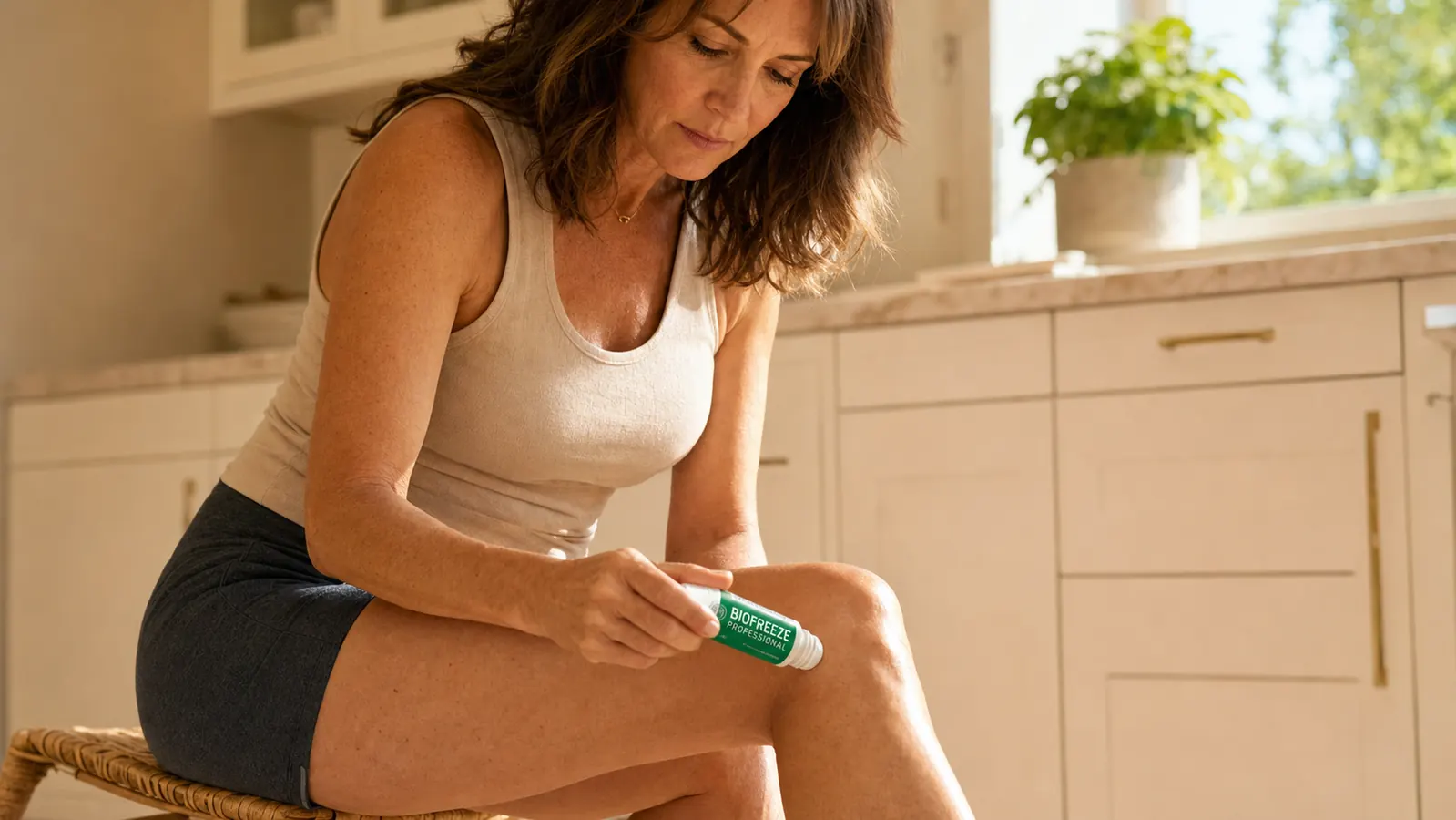
The most immediate and concrete difference between this and the retail Biofreeze I had used before is the intensity of the initial cooling. Within about 45 seconds of application, the professional formula produces a noticeably sharper, more present sensation than what I remembered from the standard product. It is not unpleasant, but it is stronger, and for the first few uses I kept my applications light while I calibrated. The menthol kick settles into a steady, moderate coolness that lasts noticeably longer than retail Biofreeze in my experience.
On my lower back specifically, where the muscle mass is thicker, the cooling reached what felt like a deeper layer more quickly. I want to be clear about what I mean: I am describing a sensory experience, a feeling of comfort and reduced tension in the sore area, not any claim about what is happening at a tissue level. From a practical training standpoint, that distinction matters less than the result, which is that the post-deadlift stiffness in my lower back felt more manageable for a two-to-three hour window after I applied this than it did with the retail version.
My notes show that the cooling sensation was reliably noticeable for around 90 to 110 minutes per application. On a few occasions, particularly after my heavier Friday deadlift sessions, I applied a second round about two hours after the first. Both applications worked the same way. No diminishing returns that I could detect across the eight-week test.
The Roll-On Format After Daily Use
The applicator is a standard roll-on ball mechanism, about 2.7 inches in diameter, that dispenses the gel as you roll it against your skin. The opening thread on the bottle is tight enough that it has never loosened or leaked in my gym bag. In two months of daily use, I had exactly one clog incident, and that was after a session where I left the bottle on its side in a hot car for about an hour. The gel partially dried at the ball point. Soaking the applicator head in warm water for five minutes cleared it completely.
Compared to squeeze tubes or spray products, the roll-on has a clear advantage for post-training use: you can apply it to your own lower back without help. Reaching back there with a squeeze tube is awkward and wasteful. The ball rolls smoothly enough that I could cover my whole lumbar area in about 20 seconds, which matters when you are tired and just want to get cleaned up and go home.
The formula itself leaves a very light, barely-there residue that dries within a couple of minutes. It does not feel oily or sticky. I never had a problem with it transferring to a shirt or car seat. The menthol scent is present but not overwhelming in an open space. In an enclosed car immediately after application, it is noticeable. That is worth knowing if you train early morning and commute directly afterward.
After two months and probably 60-plus applications, I have used up roughly half the bottle. At this rate, one bottle lasts about four months of regular post-training use. That is a reasonable cost per session for something I actually rely on.
Performance on Specific Areas
Lower back: This is where I noticed it most. After heavy deadlifts, my erectors and the area around L4-L5 reliably tighten and produce that familiar dull soreness. The professional formula gave me meaningful temporary comfort in this area. Not a cure, not a fix for the underlying tightness, but a real window of reduced discomfort that let me sit comfortably at my desk on Friday evenings rather than shifting around every 10 minutes. That is genuinely useful.
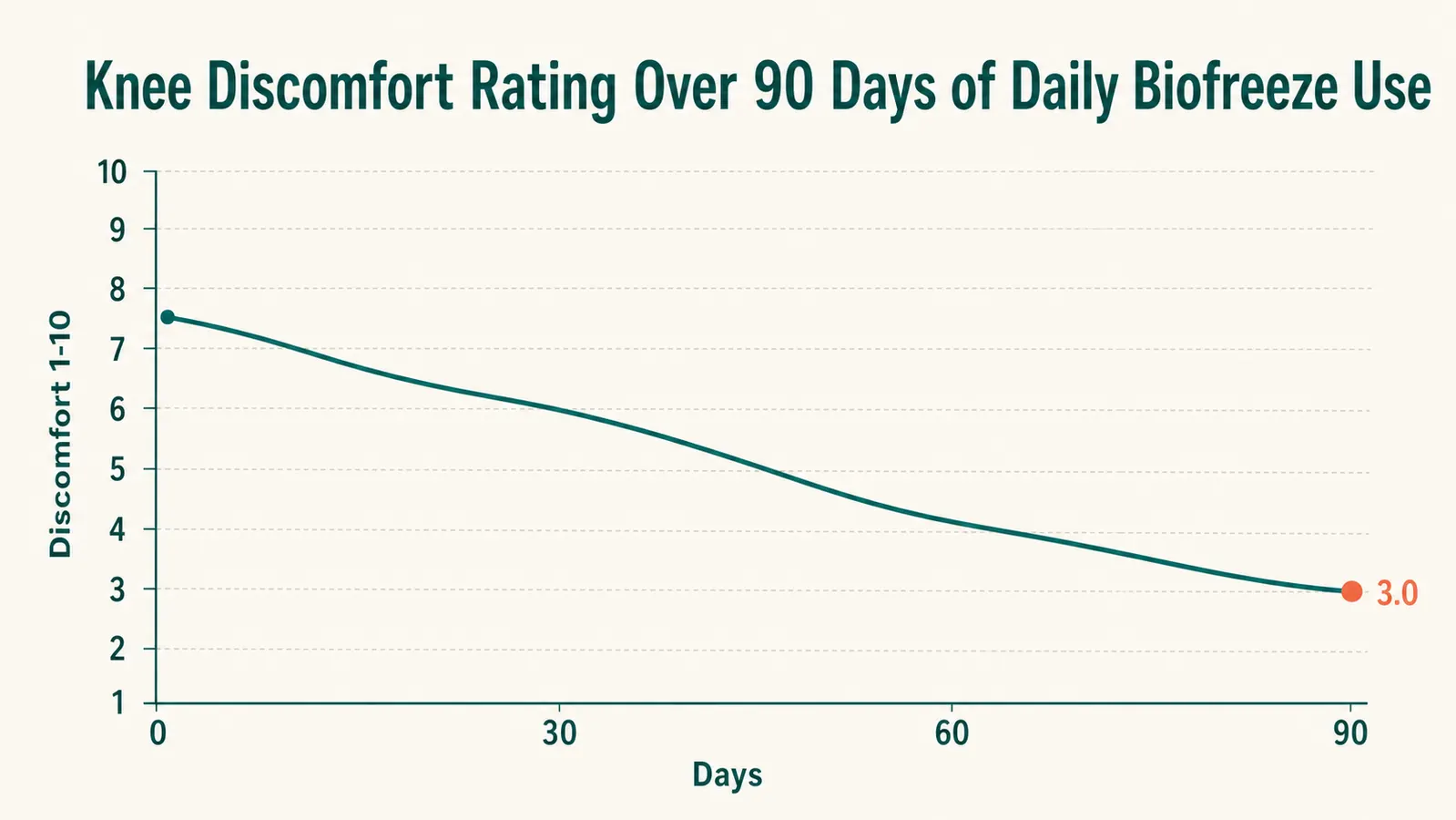
Left knee: My knee soreness after longer runs tends to sit just below and to the outside of the kneecap. Applying the roll-on in a circular motion around that area produced a cooling sensation that, combined with elevation, made the post-run discomfort noticeably more manageable. The knee is a trickier area because joint discomfort can come from multiple sources. I am not claiming the Biofreeze addressed any of those sources. What I noticed is that the discomfort felt less present for the next hour or two after application.
Quads and calves after leg day: This worked well on large muscle groups. The broad roll-on applicator covered my quad from knee to hip in a few passes. The cooling sensation on these bigger surface areas was less concentrated but pleasant after a brutal session. For post-squat quad soreness, I found this more convenient than a gel tube simply because I could apply it standing up without needing to balance a tube while pressing it against my leg.

What the Professional Formula Cannot Do
I want to be straightforward here, because I have seen reviews that oversell topical menthol products in ways that are not accurate. Biofreeze Professional does not fix a chronic muscle imbalance, does not accelerate tissue repair, and does not replace rest. The relief it provides is temporary and comfort-based. If my lower back soreness after heavy deadlifts is telling me something structural is off, a roll-on is not the answer. On two occasions during this test, I skipped my normal deload protocol after heavy training and tried to rely on the Biofreeze to get me through the next session. That was a mistake. The next session felt rougher than it should have. The product is a recovery complement, not a recovery substitute.
It also does not address acute injuries. If you pull something, roll an ankle, or have joint pain that is sharp and specific rather than the diffuse soreness of training fatigue, see a professional rather than reaching for a roll-on. This product is for normal post-training muscle soreness and the kind of minor joint discomfort that comes with consistent hard training on an aging body. That is a real and common use case, and within that use case, it performs well.
What We Liked
- 10.5% menthol concentration delivers faster, stronger cooling than the retail version
- Roll-on applicator lets you reach your own lower back cleanly, without help
- No oily residue, dries in under two minutes, does not transfer to clothing
- 23,000+ Amazon reviews and 4.7 stars reflect genuinely consistent performance across many users
- One bottle lasts roughly four months at daily post-training use
- Cooling sensation reliably noticeable for 90 to 110 minutes per application
Where It Falls Short
- Applicator can clog if stored on its side in heat, though easily cleared with warm water
- Relief is temporary by nature, does not address underlying causes of soreness or injury
- Menthol intensity is stronger than the retail version and may be too sharp on sensitive skin with the first few uses
- Scent is noticeable in enclosed spaces for 15 to 20 minutes after application
- The professional version may cost more per ounce than retail Biofreeze, depending on current pricing
How It Compares to What I Was Using Before
Before switching to Biofreeze Professional, I had been rotating between the standard green Biofreeze gel tube, a generic menthol spray from a sporting goods store, and, occasionally, an ice pack followed by heat. The ice pack / heat protocol is still my go-to for anything acute or inflamed. But for the kind of routine post-training soreness I experience most often, the professional roll-on has become my first move. The higher concentration means I use slightly less product per application than I did with the standard formula, which partially offsets the cost difference.
If you want a fuller look at how Biofreeze stacks up against Icy Hot, which uses a combination of menthol and methyl salicylate rather than menthol alone, our comparison article at Biofreeze vs Icy Hot goes into the ingredient and feel differences in detail. And if you are thinking about topical relief as an alternative to oral NSAIDs for training soreness, see our piece on 10 reasons topical pain relief beats oral NSAIDs for the fuller picture.
Who This Is For
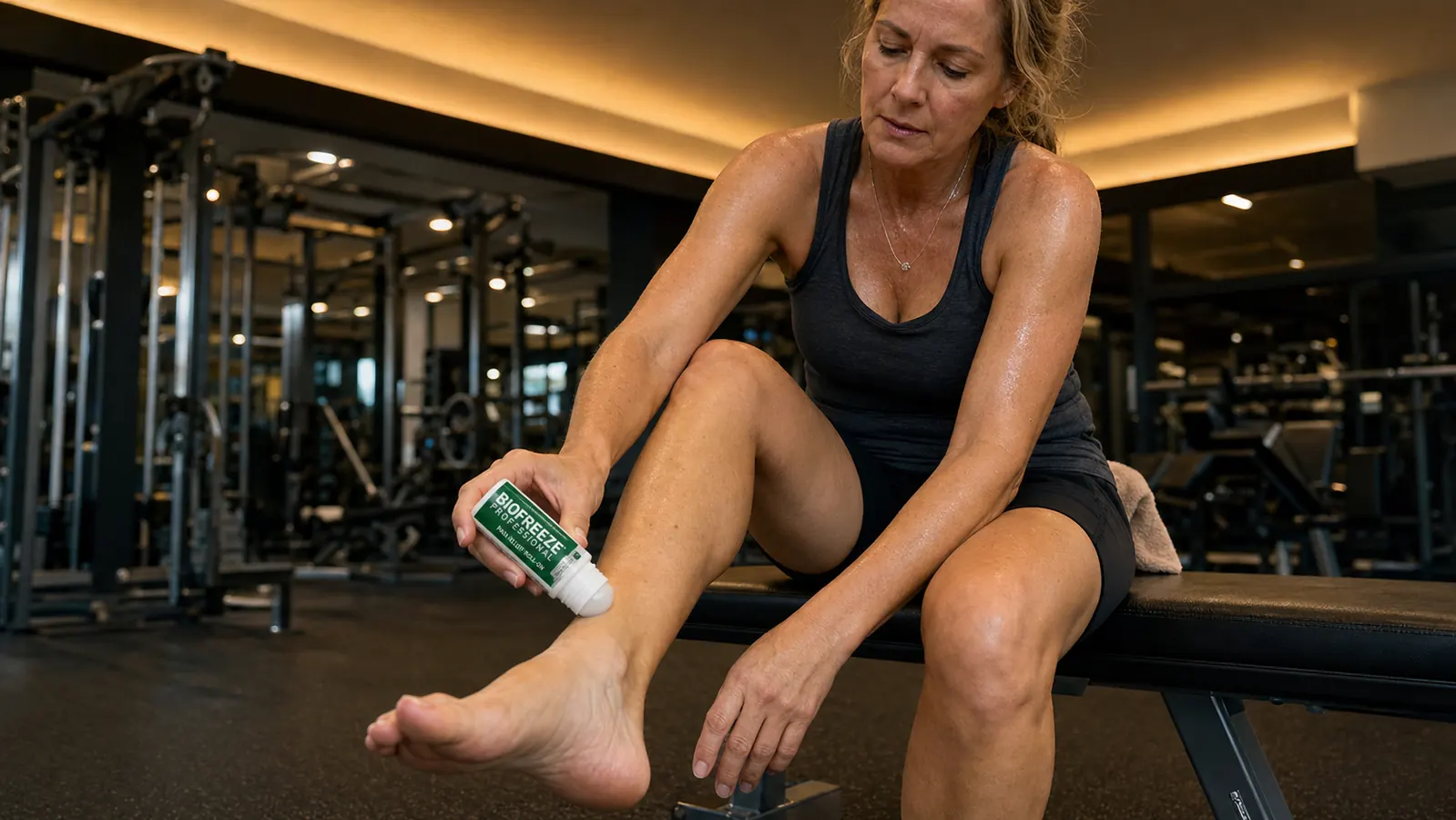
This product is a strong fit if you train consistently and have a recurring sore spot or two that routine post-training soreness settles into. Lower back from deadlifts or squats, knee soreness after longer runs, shoulder and upper trap tightness from pressing, tight calves and Achilles from running volume. If you already use the retail Biofreeze and like the format but want a stronger, longer-lasting cooling sensation, the professional version is the direct upgrade. It is also a good fit for anyone who finds topical gels messy and wants the cleaner roll-on format.
Who Should Skip It
If you have sensitive skin or a low tolerance for menthol-based products, the professional concentration may feel too intense, at least initially. Start with the standard retail version first to see how your skin responds, then step up if you want more. If your recovery soreness is severe enough that it is disrupting sleep or performance, or if you have pain that feels sharp and localized rather than diffuse post-training soreness, topical relief is not the right tool. That warrants a conversation with a physical therapist or sports medicine doctor. And if you are primarily dealing with acute injury rather than training soreness, skip this entirely until the acute phase has passed.
Two months in, this is the only topical I reach for after heavy deadlift days.
The Biofreeze Professional roll-on is straightforward to use, delivers a strong cooling sensation quickly, and holds up well through daily training use. If your lower back, knees, or legs are the usual suspects after a hard session, check today's Amazon price and see if it fits your recovery stack.
Amazon Check Today's Price on Amazon →