
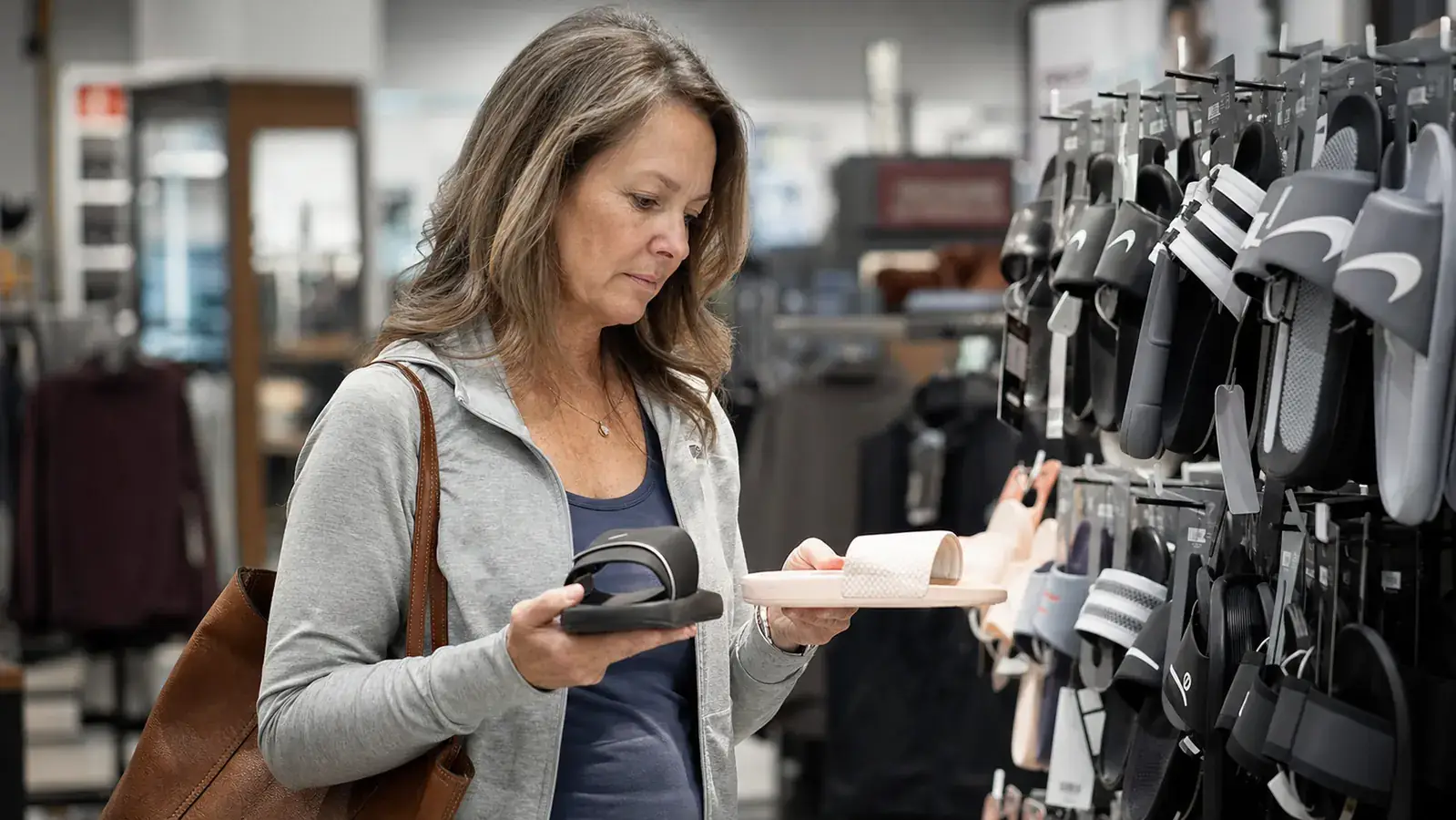
Here is the recovery gap most athletes have: they budget time and money for training gear, pre-workout supplements, and even sleep aids, but they walk from the gym to their car in the same rigid street shoes they wore all day. Your feet absorb several thousand impact cycles per training session. The 60 minutes after a workout are when cumulative stress from that impact is most acute, and walking on a hard-soled flat shoe in that window does nothing to let your plantar fascia, heel fat pad, and intrinsic foot muscles decompress. Recovery sandals exist to address exactly that window.
The category has grown significantly since specialty foam compounds started making their way from orthopedic devices into consumer footwear. Today you can spend anywhere from budget pricing on a drugstore slide to premium pricing on a recovery clog. The price gap is real, but the differences that actually matter for your feet are specific and learnable. This guide walks through the five decisions you need to make before buying recovery footwear, with the OOFOS OOahh Recovery Slide as our reference pick throughout because it sits at the center of the category and does most things well.
Your feet log thousands of impact cycles per session. Give them somewhere to actually land.
The OOFOS OOahh uses proprietary OOfoam to absorb 37% more impact than standard EVA foam. With 32,000+ reviews and a 4.4-star rating, it is the most battle-tested recovery slide on the market. Check current sizing and pricing on Amazon.
Amazon Check Today's Price on Amazon →Step 1: Identify Your Arch Type Before You Size Anything
Arch height is the single most important variable in recovery footwear selection, and most people guess at it incorrectly. A quick wet-foot test on a piece of cardboard tells you more than any shoe store associate will. Step out of the shower, plant your foot on a flat piece of cardboard, step off, and look at the imprint. A full imprint from heel to toe with no dry strip means a low arch or flat foot. A narrow connection between heel and forefoot means a high arch. A moderate strip in between is a neutral arch.
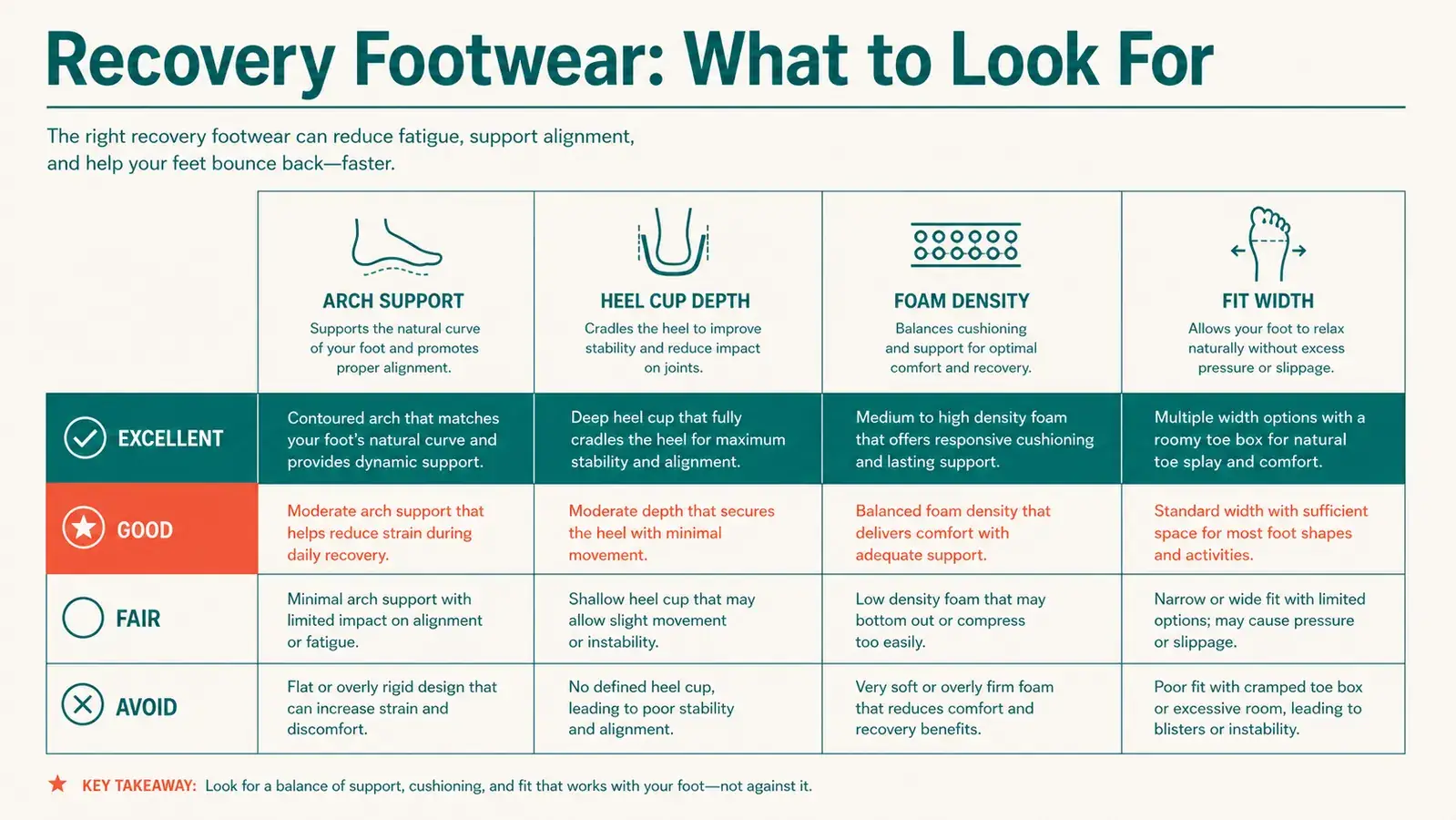
Why it matters for recovery slides: flat-arched feet pronate inward under load, and a completely flat foam slide can let that pronation continue unchecked during your recovery window, which feels comfortable momentarily but adds up poorly. You want a contoured footbed with a defined medial arch rise. High-arched feet do the opposite: they supinate and tend to load the outer heel and ball of the foot. For high arches, look for deep heel cups and lateral forefoot cushioning rather than aggressive arch posts. Neutral arches have the widest range of compatible footwear. The OOFOS OOahh footbed has a moderate arch rise and a cupped heel that handles neutral and mild low-arch profiles comfortably. If you have a pronounced high arch or a significant flat foot condition, consult a podiatrist before relying on any over-the-counter recovery sandal as your primary support solution.
One practical note on arch preference: some high-arched wearers find the OOahh footbed contour hits in an unfamiliar spot for the first few wears. That is normal with any footwear that has more structure than you are used to. Give any recovery sandal a minimum of five to seven wear sessions before judging fit comfort.
Step 2: Understand the Foam -- What Recovery Compounds Actually Do
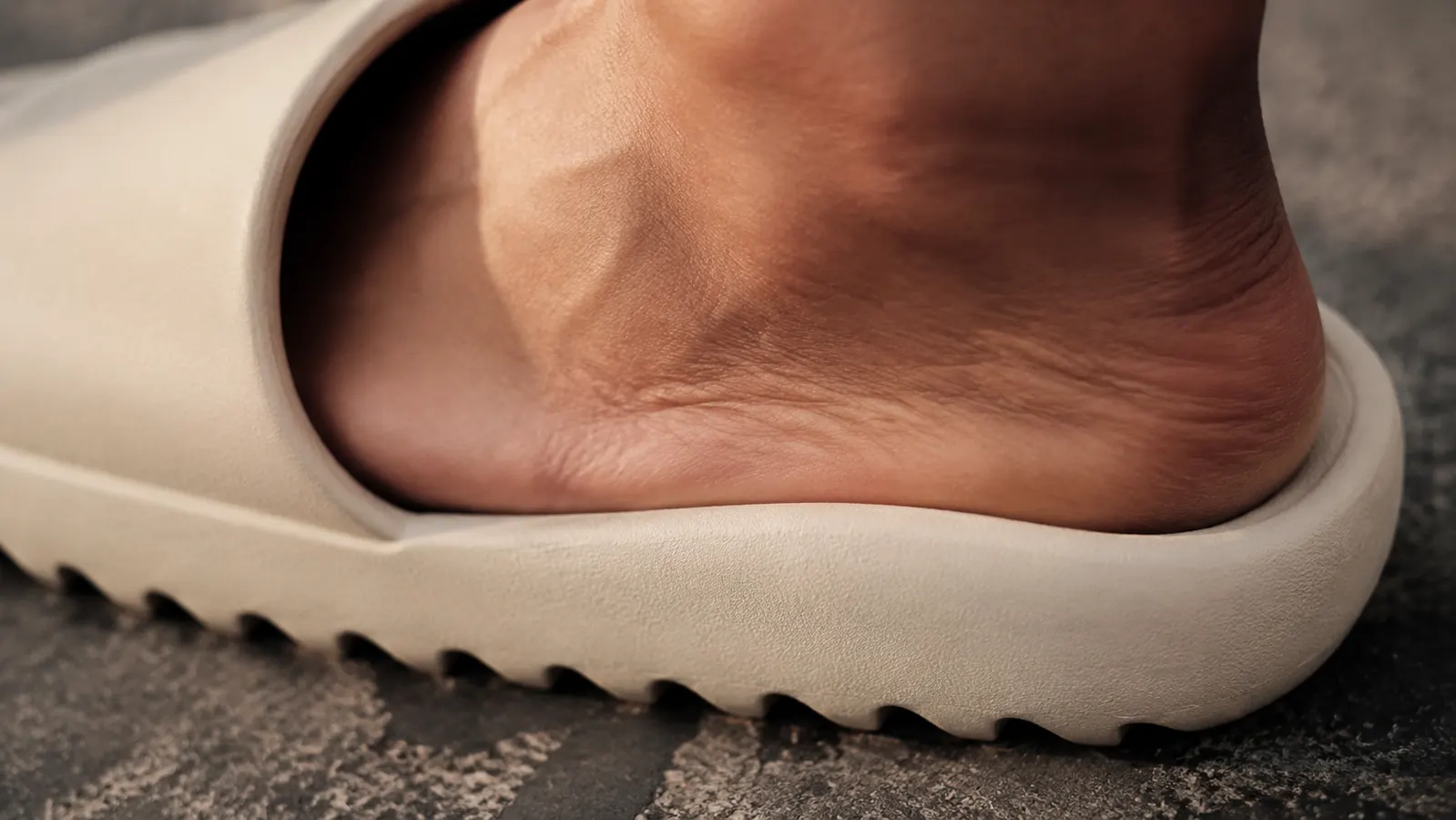
The marketing language around foam in recovery footwear is noisy. Compressed EVA, OOfoam, Hoka HOKA, Crocs Matlite -- every brand names their compound. The underlying physics are simpler than the branding suggests. Standard EVA (ethylene vinyl acetate) is lightweight and cheap. It compresses under load and rebounds quickly, which is useful in performance shoes where you want energy return. For recovery, you want the opposite behavior: you want the foam to absorb impact energy rather than return it, so the muscles and connective tissue in your foot are doing less work per step.
OOfoam, the compound OOFOS uses across their entire line including the OOahh slide, is specifically formulated to absorb rather than return. The brand claims 37% more impact absorption than standard EVA, and the on-foot feel backs that up -- there is a distinct sense of the foam taking the load rather than bouncing you off it. The tradeoff is that OOfoam feels softer and slightly less stable than a firmer EVA midsole, which matters if you are standing for extended periods. For short-to-medium recovery walks, post-gym cool-downs, or wearing around the house after a hard training day, the absorption-forward feel is exactly what you want.
When comparing foam compounds across brands, squeeze the midsole with your thumb before buying. You want meaningful give, not a rock-hard sole, but also not so soft that the heel cup collapses under body weight. A good recovery foam holds its shape under a firm press while still compressing noticeably. Foam density also affects durability: very soft foams can compress permanently over time, reducing their absorption benefit. OOfoam has held up well over extended wear periods in our testing, but it is worth checking the heel area of any used or older pair for visible compression set.
Step 3: Check Heel Cup Depth and Strap Security for Your Activity
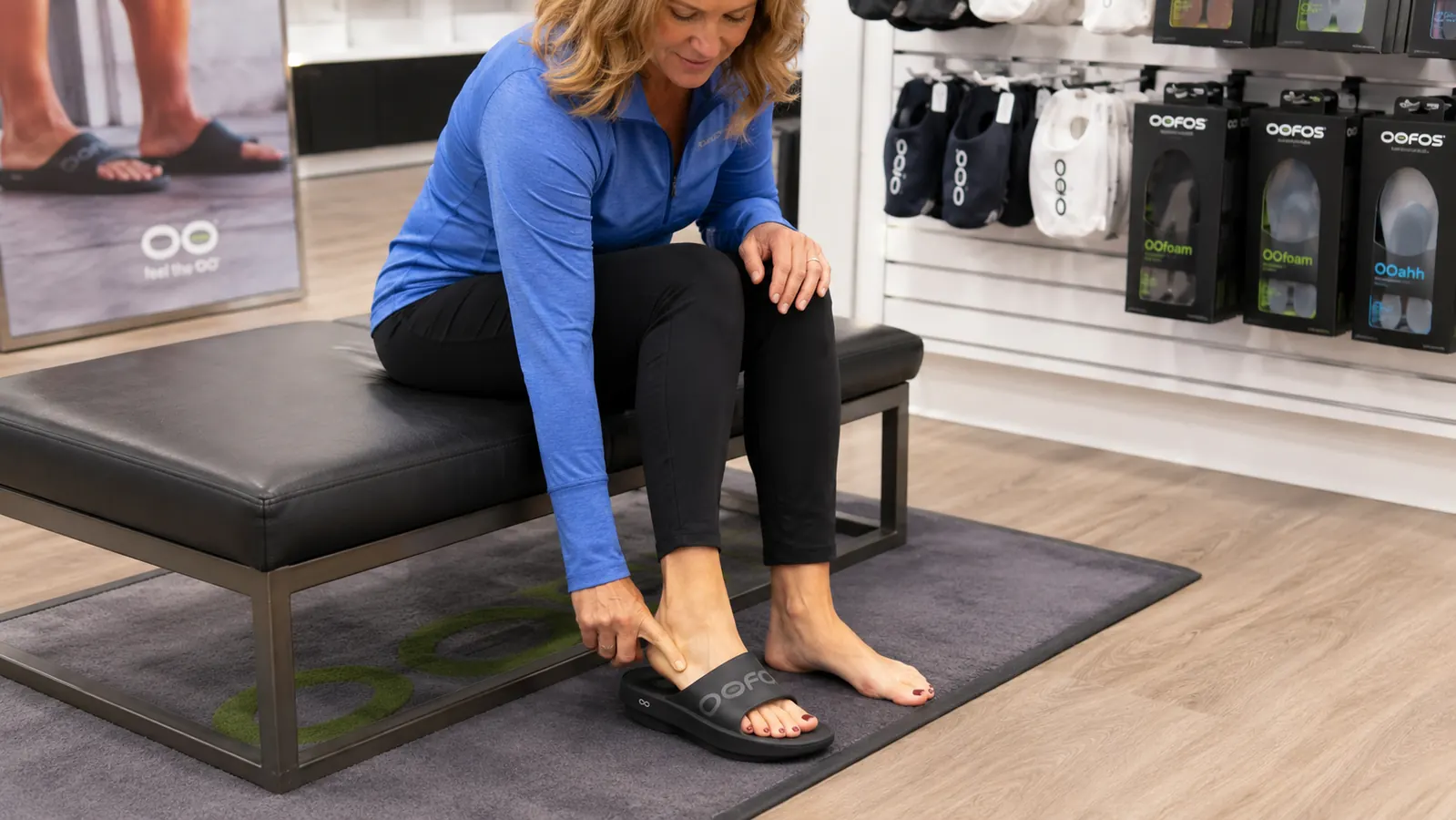
A recovery sandal that slides around on your foot while you walk is transferring work back to your stabilizer muscles and defeating the purpose. Heel cup depth and strap fit are the two mechanical elements that determine whether the shoe stays positioned correctly or migrates with each step. The heel cup should hold the calcaneus (heel bone) centered in the footbed, with approximately 2 to 3 millimeters of clearance on each side. If your heel is rocking side to side inside the cup, the cup is too wide for your foot, and you will lose the arch contact alignment the footbed is designed to provide.
The OOahh uses a single adjustable upper strap that runs across the top of the foot. It is a simple system, but it works well for the intended use case: wearing around the gym, walking to the car, moving around the house or hotel room after a travel day. The strap is not aggressive enough for hiking or extended outdoor walking on uneven surfaces. For longer active recovery walks, you would want a style with a more locked-in fit, such as a two-strap sport sandal with heel strap. The OOahh's open-heel design means it relies entirely on the strap and foot contour for retention, so make sure the strap fits snugly without cutting off circulation. OOFOS recommends sizing up half a size from your normal athletic shoe for most wearers, and that guidance has proven accurate in practice.
Step 4: Match the Slide to Your Specific Recovery Window
Recovery footwear is not a single-use category. Different athletes use it in different windows, and the best slide for immediate post-workout foot relief is not necessarily the best option for all-day wear during a rest day. Thinking through your specific use case before buying helps you avoid paying for features you will not use or, more commonly, buying a slide that is technically fine but wrong for your context.
Immediate post-workout window (0 to 90 minutes after training): This is where the OOahh excels. The foam is designed for short-burst high-absorption use rather than sustained standing. Swap into them the moment you are done training, wear them for the drive home or the hotel walk, and let your feet decompress. If your primary use case is this window, the OOahh at current pricing is the most cost-effective option in the category by a significant margin.
All-day rest day wear: If you want recovery sandals you will wear for six or more hours on an easy day, you need a slightly firmer midsole with more lateral stability to handle prolonged standing and kitchen-to-desk movement. A clog-style recovery shoe rather than an open slide may serve you better here. OOFOS also makes clog options that work well in this context.
Post-run use for runners specifically: Runners tend to accumulate the most forefoot and plantar stress per session. For runners using recovery slides immediately after runs, forefoot cushioning thickness matters as much as heel cushioning. The OOahh has consistent cushioning thickness from heel to forefoot, which makes it well-suited for this use case. Paired with a 10-minute calf stretch sequence after removing your running shoes, the OOahh covers the recovery footwear side of a solid post-run protocol.
Step 5: Evaluate Durability and Maintenance Before Committing
Recovery sandals live in gyms, locker rooms, pool decks, and hotel showers. They encounter wet surfaces, concrete floors, and the kind of casual daily abuse that would destroy a regular athletic shoe quickly. The material and construction choices determine whether your slide lasts one season or three. Look for a one-piece molded construction rather than glued layered components. Glued layers delaminate in humid environments. OOfoam is a single-material midsole and footbed, meaning there is no glue layer to fail and the structure stays intact even with frequent exposure to water.
The OOahh strap is made from a soft polymer that resists cracking better than standard rubber in cold environments. The outsole uses a standard rubber traction compound that performs well on wet tile and polished concrete. One durability consideration worth noting: the outsole traction nubs on the OOahh wear down faster than the midsole does, particularly if you are walking long distances on abrasive pavement. If you start noticing reduced grip on wet surfaces, that is the signal that the outsole is nearing the end of its useful life even if the midsole still feels cushioned. At the current price point, most users get 12 to 18 months of regular use before this becomes an issue.
Cleaning is straightforward. The OOahh can be rinsed under running water and air-dried. Avoid machine washing or high-heat drying, which can distort the foam structure. A quick wipe with mild soap and a soft brush handles anything that builds up in the footbed channels over time. No special care products required.
What Else Helps Your Feet Recover Between Sessions
Recovery footwear is one layer of a foot-and-leg recovery stack, not the whole answer. If your feet are chronically sore after training, the sandal addresses the footwear gap but does not replace the other inputs your lower legs need. A few minutes of calf raises and toe spreads post-workout keeps the intrinsic foot muscles activated rather than letting them go dormant. Rolling the arch on a dense massage ball for 90 seconds per side before putting on your recovery slides can improve the benefit you get from them, since the slide works best when the plantar fascia tension is already partially released. Compression socks during the training session itself reduce lower-leg swelling that your feet would otherwise be managing during recovery.
If foot soreness is persistent across multiple training weeks rather than acutely post-session, that is worth discussing with a sports medicine doctor or a podiatrist rather than addressing with gear alone. Recovery footwear is a comfort and feel product, and it works well within its intended scope. It is not a substitute for professional assessment if something structural is happening.
Your feet take somewhere between 3,000 and 6,000 steps per training session. The hour after you finish is when they need the most input. What you put on your feet in that window is a training decision, not just a comfort preference.
For more on why recovery sandals consistently outperform barefoot rest and standard casual shoes in the post-workout window, see our breakdown of the biomechanics involved in the 10 reasons recovery sandals reduce fatigue piece. And if you want to go deeper on the OOFOS OOahh specifically before buying, the long-term review from a marathoner who wore them for 5 months covers sizing quirks, foam compression over time, and the comparison to barefoot recovery that most short-term reviews skip.
Five steps, one clear winner. The OOFOS OOahh checks the boxes that matter for most active people.
Absorption-forward OOfoam, a contoured footbed that handles neutral and mild flat arches, one-piece molded construction for durability in wet environments, and a price point that makes it easy to justify. With over 32,000 Amazon reviews and a 4.4-star rating, this is the slide most athletes land on after doing the research you just did. Check current availability and sizing on Amazon.
Amazon Check Today's Price on Amazon →